One or two panels, done properly, and an honest word about what it will look like.
The smallest job we do, and often the correct one. A sound cage with two torn panels does not need a rescreen, and anybody who tells you it does is selling rather than looking.
| Item | Specified as | Why it is on the sheet |
|---|---|---|
| Scope | Named panels | Which bay, which panel, on the quote. Nothing else disturbed. |
| Mesh | Matched weave | Same weave as the surrounding panels, so the structure stays one specification. |
| Spline | New, .140 | The old spline in that groove comes out and does not go back. |
| Groove | Inspected | A crushed or split groove will not hold spline; that changes the job and we say so first. |
| Color | Matched, not identical | New mesh reads newer than sun-aged mesh. Always. |
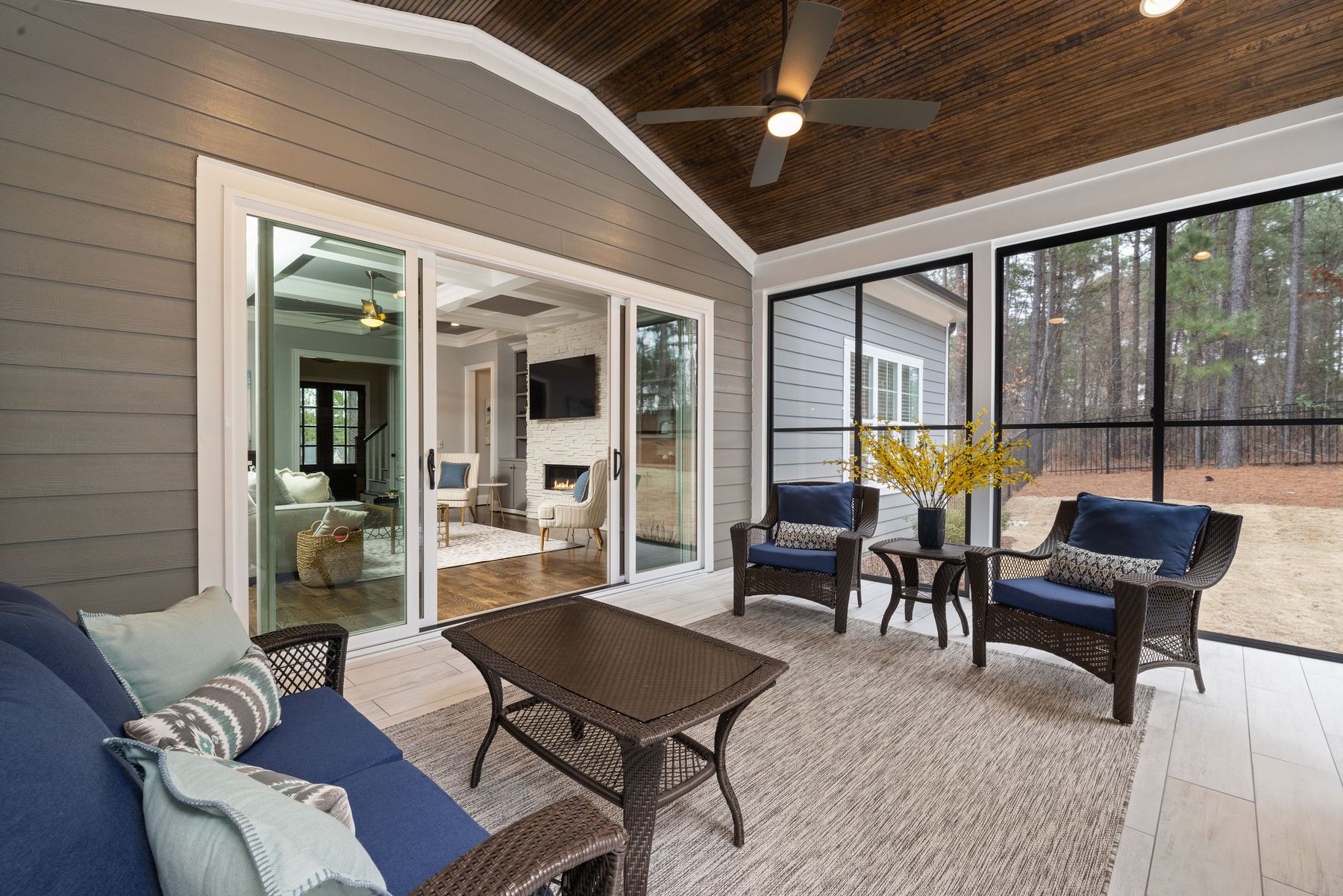
Most panel damage happens where the panel meets everyday life.
When a repair is the right answer
A branch came down. A chair went over. A ladder leaned where it should not have. The cage is under about eight or ten years old, the rest of the mesh still has real tension in it, and one or two panels are torn. That is a repair, it takes hours rather than a day, and rescreening the whole structure would be spending several thousand dollars to solve a problem worth a few hundred.
We will say that out loud even when we are standing there with the ability to sell you the bigger job.
Where the tear is tells you what happened
This matters more than people expect, and it changes what the repair should be.
Torn across the middle of the panel is impact. Something hit it. The mesh was doing its job right up until the moment it was struck, and the surrounding panels are probably fine.
Pulled cleanly out of the groove, edge intact is not a mesh failure at all — it is a spline failure. The vinyl went hard, shrank, lost its grip, or it was the wrong gauge or reused when the cage was last screened. Replacing that one panel without addressing why the spline let go means the panel next to it is on the same clock.
Shredded along an edge with the mesh brittle to the touch is age. If mesh crumbles between your fingers, a panel repair is a patch on a structure that has finished its screen life, and we would rather you knew that before paying for the patch.
The thing we tell everybody in advance
The new panel will look new. Not slightly — obviously. New charcoal mesh is darker and tighter and its edge is crisper than mesh that has had a decade of Florida sun on it, and you will notice it from the far side of the deck for the first year or two.
There is no product that fixes this and no technique that hides it. Weathered mesh cannot be matched, it can only be replaced alongside. We say it at the quote because the alternative is you finding out at the end, and it is a much worse conversation then.
The point where we stop recommending repairs
Somewhere around the fourth or fifth panel on an older cage, the arithmetic turns over. Each repair carries its own visit and its own setup, and you are buying the same mobilization repeatedly to chase a mesh that is failing everywhere at once.
At that point we price it both ways and hand you two numbers on the same sheet: panel by panel now, and a full rescreen. The repair number is smaller today. The rescreen number is usually smaller across three years, and it is the one that leaves the structure in a single condition rather than a patchwork of dates.
You choose. But you choose with both numbers in front of you, which is the only version of that conversation worth having.
Damaged grooves
Occasionally we open a panel and find the spline channel itself is split, crushed or corroded through — usually from someone previously forcing oversized spline in with a screwdriver. A groove in that condition will not hold new spline reliably no matter what we press into it. That is a frame repair on that member, not a screen repair, and it gets quoted as one. We will not roll mesh into a groove we know will let go.
1Sometimes the honest answer is that the repair is not worth doing.
If the mesh crumbles when it is rubbed between finger and thumb, replacing one panel buys you a nicer-looking square in a structure that is going to keep failing around it. We would rather tell you to save the money toward a rescreen and get the whole cage back in one condition.
That advice costs us the repair. It is still the advice.
Two panels or twelve?
Send a description or have somebody come and count them. Either way you will get told which of the two jobs it actually is.