Two vans, out of St. Petersburg, since 2015
Owner-run. One of us started it, one of us drives the second van, and between them they cover west Pinellas County and as far east as the day allows.
Why a van and not a unit
The first year of this was one van and a phone, and the plan was always to take a unit somewhere eventually. We never did, and it stopped being about money fairly quickly. A shop changes what you say yes to. Rent has to be covered whether or not the work is worth doing, and the pressure that puts on a quote is quiet and constant — you find yourself talking a customer into a marginal repair because the lights are on either way.
A van does not do that. Overheads are a payment, fuel and consumables, and if a dent is not a paintless dent we can say so, drive away, and lose nothing but an hour. The refusals on our work orders exist because the business is built in a way that can afford them.
What is actually in it
Rods and whale tails, a set of glue tabs and a slide hammer for the pulls that have to come from the face, a knockdown and a blending hammer, line boards and a bank of LED lighting on a stand, a small compressor, an inverter, a plastic welder, a mobile spot-repair spray setup with proper extraction, wheel finishing gear, and enough trim tools to get a door card off without breaking half the clips. The rest is consumables and a lot of clip stock, because the clips that hold modern trim are designed to be used once and to snap on the way out.
There is a ladder on the roof and a canopy that comes off the side, and both get used more than you would think — the ladder for reading a roof panel on a truck, the canopy because reading a shallow dent in direct Florida sun is not reading, it is guessing.
Where we came from
Body shop, then hail work. Hail is where most people in this trade learn it, because a storm puts a season’s worth of dents in front of you in a fortnight and there is no way to fake your way through a roof panel. It also teaches the thing this website is mostly about: on a car with a hundred and forty dents, four of them will be over cracked paint, and the tech who pushes those four out has just turned a paintless job into a repaint. You learn to look before you touch, and you learn to say so out loud.
The address
210 Curbside Loop, St. Petersburg, FL 33701 is a yard. The vans get loaded there in the morning and parked there at night, and there is nothing else on the site. There is no counter, no waiting room, no coffee and nobody to talk to during the day, because during the day both vans are somewhere else. If you drive over you will find a gate. The work happens where your car is, which is the entire proposition.
What we will not put on this page
No star rating, no repair count, no years-of-combined-experience arithmetic, no awards. Every one of those numbers is unverifiable from where you are sitting, and a good many of the ones you see in this trade are invented. What can be checked is a written work order that lists what was declined and why — so that is what we put in front of you instead.

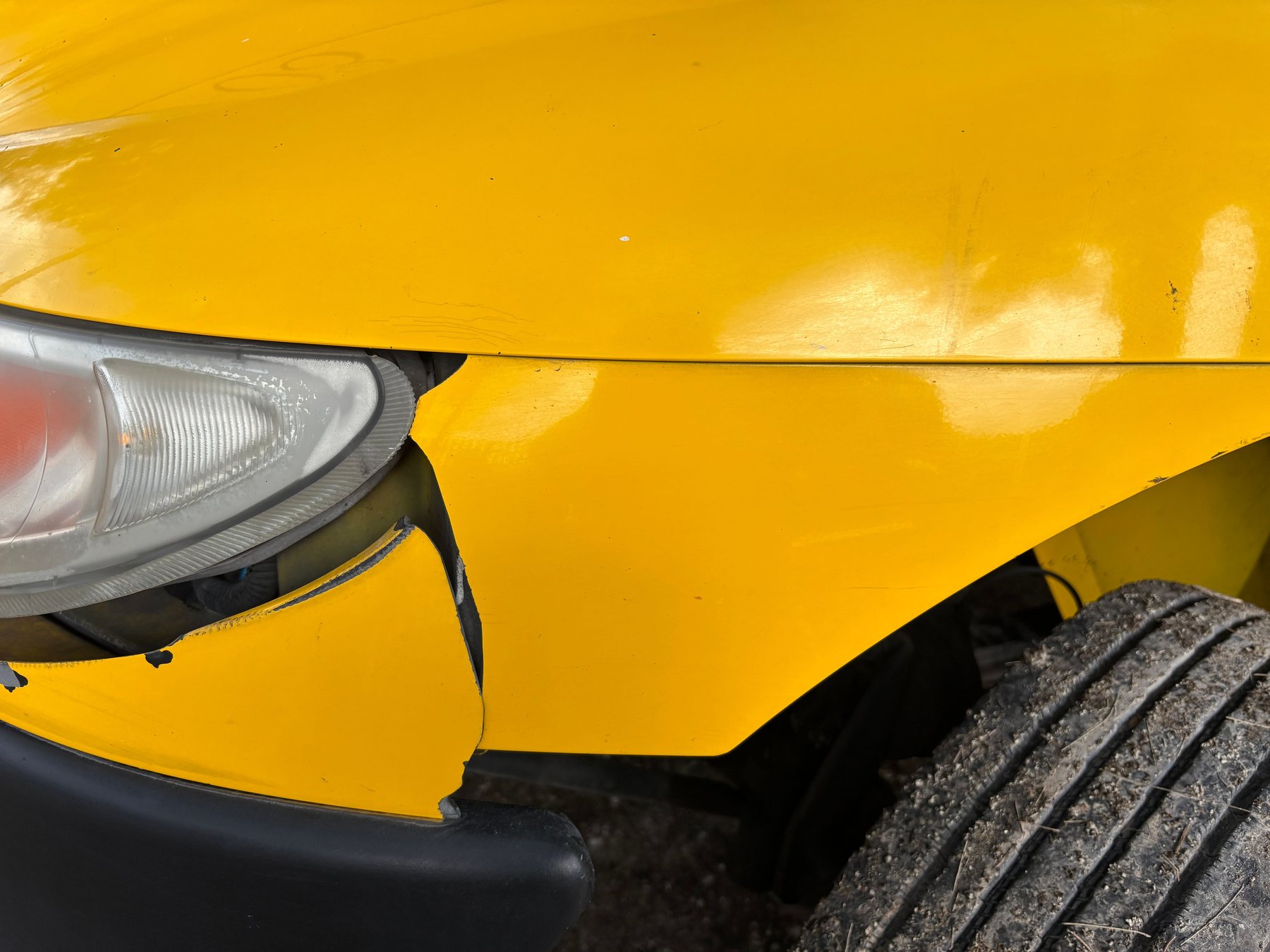
A real site carries the company's own photographs in those frames — the vans, the techs, the panels — and each one is captioned with the picture that belongs in it. None have been generated for this demonstration. There is no before-and-after frame here and there is not going to be one: in this trade that pair is the result, so an invented one would be a fabricated repair rather than a placeholder.