How a job goes
Five steps, and the second one is the one that matters. Two of the five happen before anybody gets in a van, which is the whole point of doing it this way.
Text them to (656) 236-2374. Three shots do almost all of the work:
- Straight on, close, in daylight, no flash. This one shows the paint. A flash blows out exactly the detail that decides whether the job is possible at all.
- A low, raking angle with something straight reflecting across the damage. A roof line, a door frame, the edge of a building, a fluorescent tube overhead. That reflected line bends where the panel is bent, and the shape of the bend tells a tech more than any description ever has. It is the same trick as the line board we set up at the car, done with whatever is around you.
- One wide shot of where the car will be parked. Which sounds like an odd request until a van is halfway to a parking structure with a six-foot-eight clearance bar.
If the light is bad, wet the panel first. Water fills the texture and the reflection sharpens up enough to show a hairline crack.
Somebody who does this for a living looks at them, same day. Three answers come back, and only one of them is a sale.
Yes. The paint is unbroken, there is a way to the back of the panel, and it is worth doing. You get the next step.
No, and here is who. The finish is cracked, or the crease is stretched, or the panel is bonded and blind. We say what is wrong, what it will take, and what sort of shop does it. There is nothing to pay and we do not send a van out to tell you in person.
Yes, but do not expect perfect. This is the answer nobody else gives. A difficult dent in a hard location can come back eighty or ninety per cent of the way and leave something you can find if you go looking in the right light. If that is the honest expectation, you get told it now, in writing, while it is still easy to say no thank you.
Line by line, with the trip charge on it if there is one, sent before anything is scheduled. That estimate is what appears on the work order at the end. Nothing gets discovered halfway through and added while your car is in pieces in a parking lot.
If we open a trim panel and find something the photographs could not show — and it does happen, perhaps once in a couple of dozen jobs — the work stops and you get a phone call with the choice. It is your car and your money, and neither of those changes because a van is already parked next to it.
You get a two hour window rather than a time, because the honest alternative is a time we would miss. A dent that reads as one thing on a phone screen occasionally turns out to be two, and we would rather run over on the job in front of you than rush it to protect a promise.
The van needs about twelve feet of clear space on the working side, reasonably level ground, and shade or somewhere out of direct sun for anything involving paint. It carries its own power, compressor, lighting and water. Nothing gets plugged into your house and nothing runs off your office’s outlets.
You do not have to be there. Plenty of jobs are done on a set of keys left at a front desk. For most door work the interior card has to come off, so the car does need to be unlockable, and we will say so up front rather than turning up and finding out.
Before the van leaves. Every line: what was done, what was found, what it cost, and anything looked at and declined at zero, with the reason written out in full rather than a dash in a column.
That document is the actual product. A repair is over in an hour and you forget it. What you keep is a piece of paper that says somebody looked at your car and told you the truth about it, including the part where they talked themselves out of money. There is a worked example on the front page.
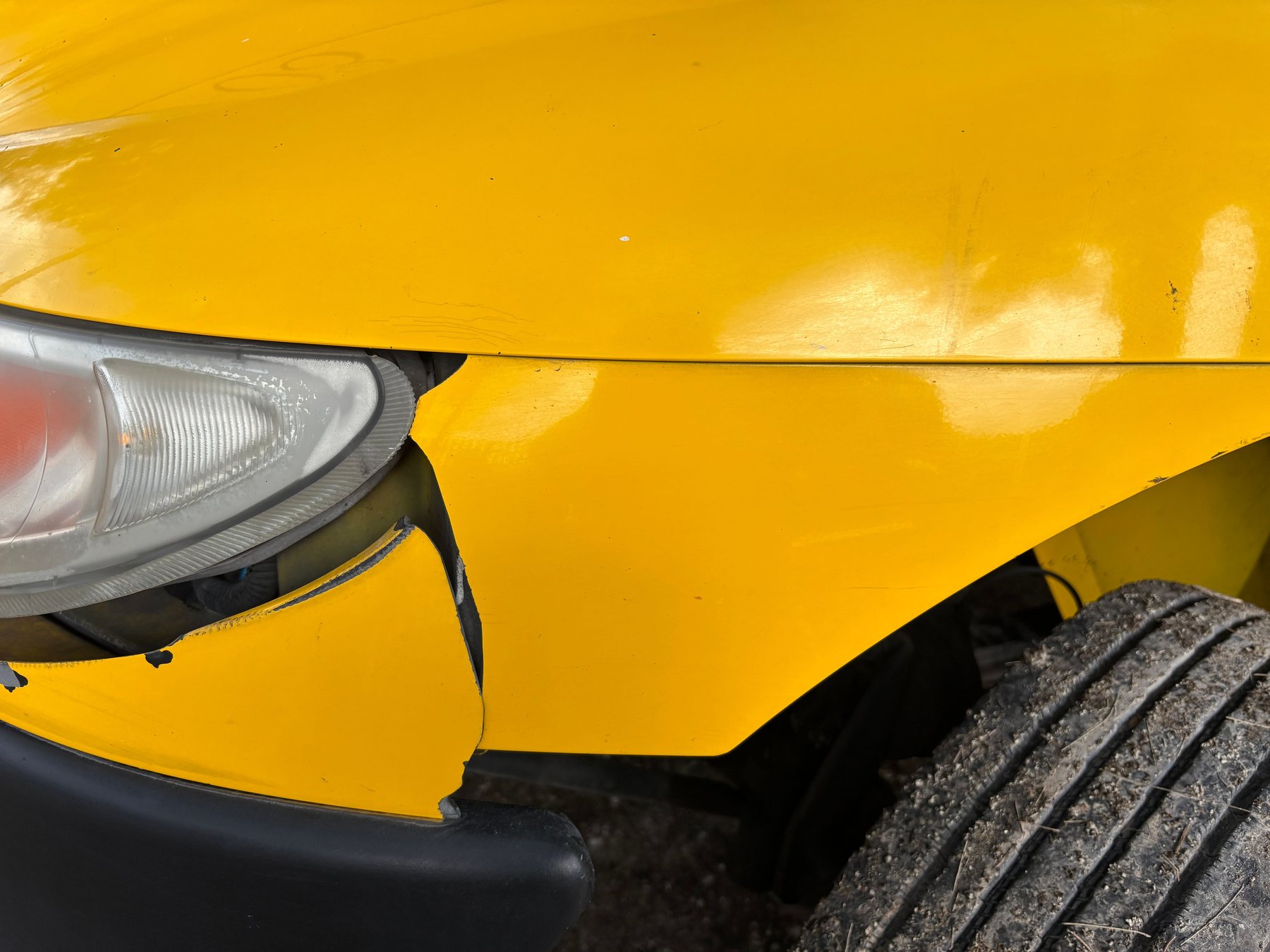
A real site carries the company's own photographs in those frames — the vans, the techs, the panels — and each one is captioned with the picture that belongs in it. None have been generated for this demonstration. There is no before-and-after frame here and there is not going to be one: in this trade that pair is the result, so an invented one would be a fabricated repair rather than a placeholder.