Queue → job type
Hail damage
Not one dent — a field of them across the horizontal panels. Priced by panel and by density, never by the dent, and it needs shade to read at all.
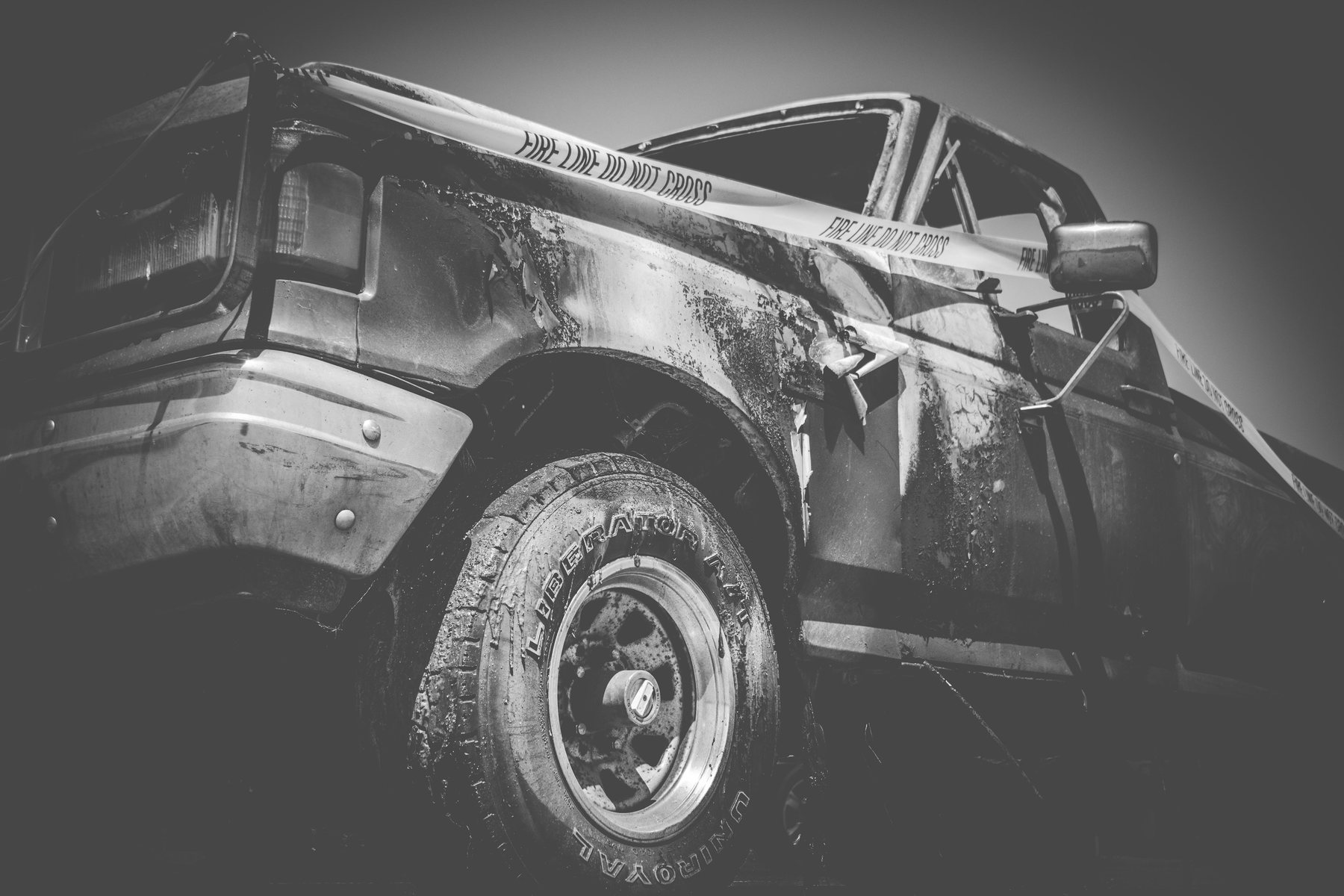
A hundred small dents, not one big one
Hail lands on the horizontal surfaces first: roof, hood, deck lid, then the tops of the wings and the upper edges of the doors as the storm blows sideways. What you get is not damage in one place, it is a field of shallow craters across a whole panel, most of them too soft to feel and every one of them perfectly visible the moment a straight reflection crosses the car.
Individually they are easy. Collectively they are days of work, and the difficulty is not any single dent, it is keeping the panel true across hundreds of small pushes without slowly crowning the whole thing.
Priced by panel, never by the dent
Everybody asks what a dent costs. On hail, that is the wrong unit. Each panel gets assessed for how many dents are in it, how dense they are per square foot, how deep the worst of them go, and whether any sit on a body line or over a brace — and that produces a band for the panel. The bands add up to the estimate. It is the same structure as the hail matrix a body shop and an adjuster work from, and it is the only version that can be checked line by line afterwards.
Counting individual dents past about thirty is theater. Anyone quoting hail per dent is either guessing or building in room to guess later.
Roofs, and the headliner problem
A roof takes the worst of it and it is also the hardest panel to reach. There are braces bonded across the underside, and the way to the back of the metal is often through the headliner — which means dropping it, which means pillar trim, grab handles, visors, and sometimes disconnecting things that would rather not be disconnected. That turns a roof from an hour into most of a day, and it is the single biggest line on most hail estimates. It is also the line people are most surprised by, so it gets explained before it is agreed rather than after.
It needs shade, and that is not negotiable
You cannot read a shallow hail dent in direct sun. There is no reflection to watch, only glare across the whole panel, and a tech working blind will leave half the damage in the car and put highs in the rest. Hail work happens in a garage, in a covered bay, or under the canopy that comes off the side of the van, and if none of those exist at your address we will move the visit to first light rather than pretend.
Insurance
You get a written work order with every panel and every price on it, and you can submit that yourself. It is generally exactly the document an adjuster wants. What we do not do is negotiate supplements, work as anybody's preferred vendor, or write a number to fit a claim rather than the car. If your insurer wants a different figure, that is a conversation between you and them, and our assessment stays what the car actually needs.
Any panel with cracked paint from the impact
Heavy hail occasionally splits the finish at the deepest craters. Those panels are not paintless work, and they get marked as such on the assessment rather than quietly worked around.
Panels that have already been repainted
Aftermarket paint over filler behaves nothing like factory finish under a rod, and it cracks and lifts far more readily. If a panel has been resprayed we will say so and price it out of the paintless portion.
Nowhere shaded to work, at any time of day
Reading a hundred shallow dents in direct sun is not reading, it is guessing, and a guessed hail repair leaves half the damage in the car. No garage, no cover and no room for the canopy means we move the job or decline it.
A number written to fit the claim rather than the car
We will give you a written work order to submit yourself and we will explain any line on it. What we will not do is adjust the assessment to match what an insurer would prefer it said.
The frame above is built at the size and shape the real picture will be, and its caption names the photograph that belongs in it. A real site carries the company's own — their vans, their techs, their panels. None have been generated for this demonstration. There is no before-and-after frame here and there is not going to be one: in this trade that pair is the result, so an invented one would be a fabricated repair rather than a placeholder.
Text photographs to (656) 236-2374 and you will have an answer the same day — a written price, or a reason it is not ours. Or use the request form. What to photograph, and why →