Queue → job type
Bumper scuffs and scrapes
A plastic cover is not a steel panel, and a scuff is not a dent. There is nothing to push out — it is prep, adhesion and refinishing, done properly or not at all.
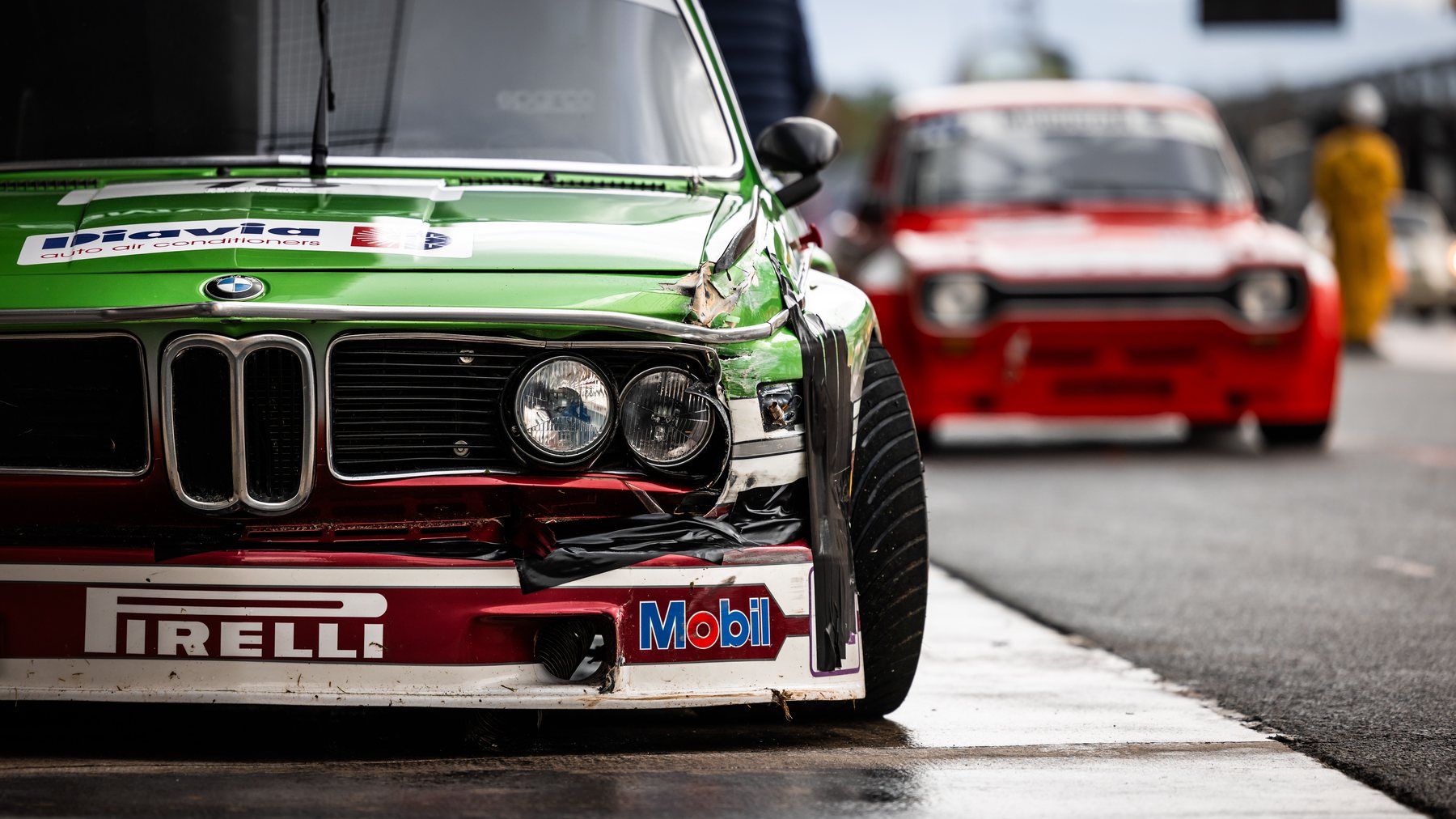
Plastic is not steel, and that changes everything
A bumper cover is a flexible thermoplastic skin — polypropylene or TPO on nearly everything — hung on clips and tabs over a reinforcement bar you never see. When a steel wing is dented, metal has moved and metal can be moved back. When a bumper cover is scuffed, nothing has moved: the coating has been abraded off, and sometimes the plastic underneath has been gouged out with it. There is nothing to push. It is a refinishing job wearing a dent's clothes.
How the repair actually goes
The damage is sanded back past the torn edges of the coating until what is left is sound. Gouges in the plastic get filled with a flexible filler that will move with the cover rather than crack off it the first cold morning. Then the part that most people skip: adhesion promoter. Raw polypropylene is chemically hostile to paint — primer simply does not key to it — and without a promoter the repair looks perfect for four months and then lifts off in a sheet. On top of that, primer, color and clear, with a flex additive through the material so the finish moves with a panel that is designed to flex.
Deformed covers are a separate step. A cover that has been pushed in and stayed in can often be heat-reformed — warmed carefully and worked back to its shape — before any refinishing starts. Done with too much heat you get a shiny, distorted patch that no paint hides.
Blending, and the honest limit of it
Color is the hard part, particularly a metallic or a pearl, where the match depends on how the flake lies as much as on the pigment. Nobody sprays a hard edge and stops; the new color is faded out into the surrounding original over a distance so the eye never finds a boundary.
On a corner, that works beautifully. There is a natural break — a body line, a curve away from the light — to fade into, and the repair disappears. Across the flat middle of a bumper cover, on a silver or a pearl white, it very often does not. There is nowhere to hide the transition and you end up with a patch that catches the light differently from ten feet away, forever.
When that is what we are looking at, the honest answer is that the whole cover should be refinished in a booth, and we say it. It costs you more and it earns us nothing, and it is the difference between a repair you stop noticing and one you see every time you walk up to the car.
Working outdoors, honestly
Mobile refinishing has real constraints and anybody who says otherwise has not done it. It needs shade, low wind, a dry surface and sensible humidity. The van carries extraction and masking so there is no overspray drifting across the parking lot onto the vehicle in the next bay, which is the thing property managers are actually worried about. In the rain, or in a stiff breeze carrying grit across a lot, the job moves to another day. That is not caution for its own sake; contamination in fresh clear cannot be polished out afterwards, it has to be cut back and done again.
Leave it out of the brush wash for forty-eight hours. It is dry to the touch long before it is hard, and a spinning bristle finds the difference.
When it is a replacement, not a repair
If the mounting tabs behind the arch have snapped off, or the cover is cracked through, no finish work fixes it. A cover with broken tabs sits proud of the wing and nobody ever stops seeing that gap. That is a new cover, painted and fitted, and it is a body shop job.
The cover is cracked through or the tabs are snapped
A cover that will not sit flush against the wing looks wrong no matter how good the finish is. That is a replacement cover, fitted and painted, and it is a body shop job.
Blending would show, and we can see that it would
Damage across the flat middle of a silver, a pearl or a tri-coat has nowhere to fade out to. When the honest answer is a full cover refinished in a booth, that is the answer we give, even though it sends the work somewhere else.
The weather is wrong today
Wind carrying grit, rain, or a damp surface will contaminate fresh clear in a way that cannot be polished out later. We move the visit rather than hand back a repair that has to be redone.
The property will not have spraying done on site
Some office parks and associations say no, and that is their call. We check before scheduling rather than getting moved on halfway through with your bumper masked up.
The frame above is built at the size and shape the real picture will be, and its caption names the photograph that belongs in it. A real site carries the company's own — their vans, their techs, their panels. None have been generated for this demonstration. There is no before-and-after frame here and there is not going to be one: in this trade that pair is the result, so an invented one would be a fabricated repair rather than a placeholder.
Text photographs to (656) 236-2374 and you will have an answer the same day — a written price, or a reason it is not ours. Or use the request form. What to photograph, and why →