Stop 05 of 08
Three systems that all end at a socket
Shore power, the converter and the inverter are three separate things that get blamed for each other constantly. Knowing which one has failed is most of the repair.
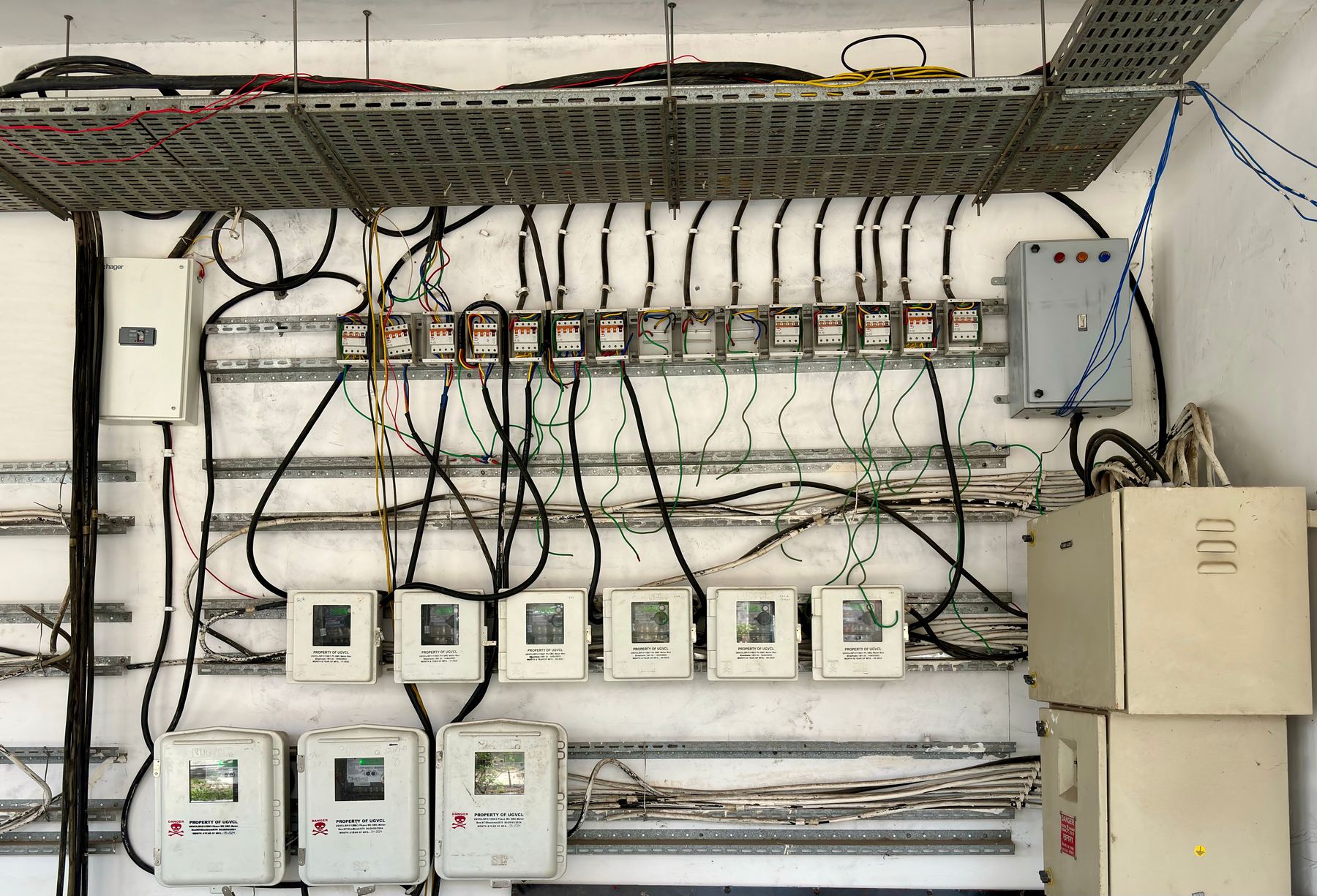
Shore power
The mains supply: the pedestal or the house socket, the cord, the breaker, and on a rig with a generator or a second inlet, a transfer switch that decides which source wins. Faults here are usually outside the rig. A campground pedestal with a loose neutral or reversed polarity will do real damage, and we test the pedestal before blaming anything inside. Cord ends are the other classic: an overheated plug end with a browned, pitted blade is a fire risk and a common cause of “the air conditioner keeps tripping out”.
Thirty amp and fifty amp are not the same service with a different plug. Thirty is a single leg; fifty is two legs and roughly four times the available power. An adapter lets you plug in; it does not give you the power, and a lot of frustration comes from expecting it to.
The converter
The converter takes mains and makes twelve volt: it runs your lights, pump, fans and vents, and it charges the house batteries. When it fails, the symptom is usually not darkness — it is batteries that quietly never come up to charge while you sit plugged in wondering why things are dim by the third evening.
A modern converter charges in stages: a high-current bulk stage, an absorption stage that tapers, and a float stage that holds. An older single-stage unit sits at one voltage forever, which either boils a flooded battery dry or never fully charges an AGM. The charging profile also has to match the chemistry: flooded, AGM and lithium want different voltages, and fitting lithium batteries to a rig whose converter was designed for flooded cells is a job that includes the converter, not just the batteries. That gets sold as a battery swap far too often.
The inverter
The inverter goes the other way: twelve volt out of the batteries, mains into a few sockets. The word “few” is the important part — on most rigs only certain outlets are wired through it, chosen when it was installed. Half the inverter faults we are called about are an outlet that was never on the inverter circuit in the first place. It is worth knowing which of your sockets are live off battery, and we will map them and write it down.
Batteries fail under load, not at rest
A tired battery will show a perfectly respectable resting voltage and then collapse the moment anything asks it for current. That is why a multimeter reading on a rested battery tells you very little, and why we load test each battery individually. A bank tested as a bank hides the weak one, and the weak one drags the good ones down with it.
Which is also why we will replace one battery out of a pair when the other one tests clean and is close to it in age and chemistry. Replacing a matched pair sounds thorough and is often just a bigger sale. Where it is genuinely wrong — a three-year-old paired with a new one, or two different chemistries — we will say so and explain why.
Parasitic draw
The commonest “my batteries are trash” call is not the batteries. It is a rig sitting in storage with something quietly awake: a propane detector, a stereo memory, an antenna booster, a control board. Those small draws will flatten a bank over a summer, and a lead-acid battery left flat sulfates and does not fully come back. We measure the draw with a clamp rather than guessing, find what is awake, and then talk about whether a disconnect switch or a small solar maintainer is the answer for how you actually store it.
Solar, briefly and honestly
A modest panel and a decent controller will hold a stored bank up through a Florida summer and is one of the best-value things you can add. A large system to run air conditioning off battery is a different conversation involving a lot of battery, a big inverter and wiring most rigs do not have. We will tell you which of those two you are actually asking for before anybody sells you anything.
How we test
- PedestalBefore anything inside
- Cord endsHeat and pitting
- Transfer switchUnder load
- ConverterCharging voltage, by stage
- InverterWhich outlets, mapped
- BatteriesLoad tested, one by one
- Parasitic drawClamp meter, in amps
- ChemistryMatched to the charger
Electrical is diagnosis before parts. We will not quote a part over the phone for a fault nobody has traced yet.
Three questions to ask any shop
“Did you test it under load?”
If the answer is a resting voltage reading, the battery has not been tested. A resting figure is a starting point and nothing more.
“What is the charging voltage?”
A converter that is not holding the right voltage for your chemistry will kill a new bank as efficiently as it killed the old one. Replacing batteries without measuring the charger is replacing a symptom.
“Which outlets are on the inverter?”
Anybody who has actually looked at your rig can answer this. It is the fastest way to find out whether a diagnosis was done or assumed.
Twelve volt and mains
Get it traced, not guessed
Bring the rig in, or have the van come to the lot. Either way it gets traced from the source.