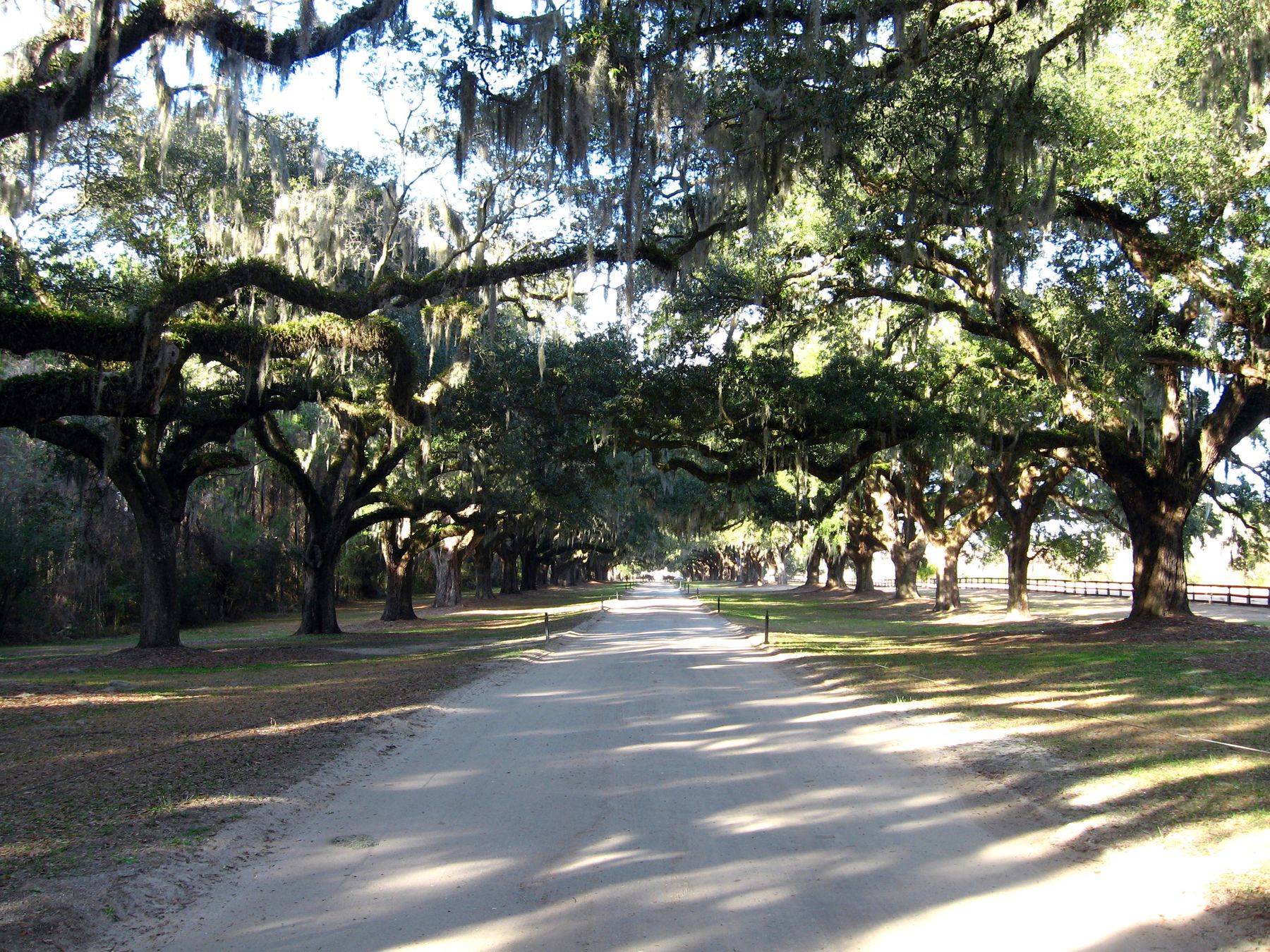
Tree care in Sarasota. It may not have to come down.
Closeness gets read as risk, and a surprising number of removal calls should have been pruning calls — so the walk begins by asking what the tree is actually doing. Most people never find out what was done to their tree: a number on a magnet-backed invoice and a yard full of chips. The card below is the whole of our argument for hiring us, and you can read it before you call.
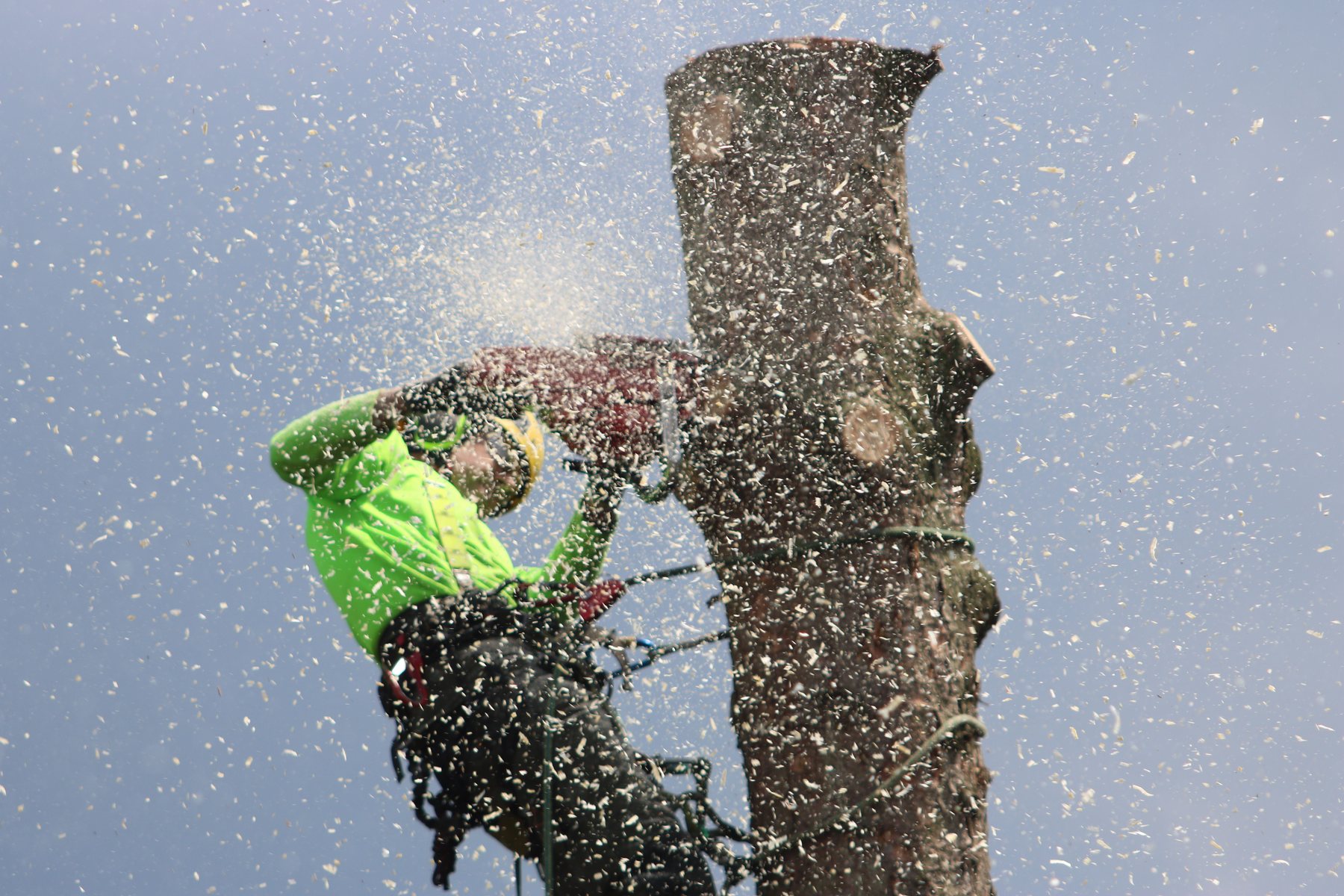
You called to have it taken down. It is still standing.
- MON 08:15
You ask about the oak over the bedroom
The owner answers, Monday to Saturday. You get asked what the tree is doing that bothers you, which is a different question from what you want done to it. Half the time the answer changes the job.
- MON 10:40
Somebody walks the property with you
Half an hour to an hour, bottom to top. Root flare first — a stem that goes into the ground like a telegraph pole instead of flaring out, mushrooms at the base, a trench somebody cut through the root zone for a cable two summers ago. Then the trunk, then the unions, then the crown.
- MON 11:25
The removal you asked for is written down as refused
The tree is not dangerous. It is close, and closeness is being read as risk. Reducing the two limbs over the roofline is a smaller job with a better outcome, and we would rather sell you that. The removal goes on the written scope at zero, with the reason, so you are not hearing it for the first time on the day.
- THU 09:30
Two limbs come off. The tree stays
Shortened back to living laterals for eight feet of clearance to the shingles, every cut placed outside the branch collar. The climber goes up on a rope set from a throwline rather than on spikes, because spikes are for removals. Live crown taken off this tree today: about twelve per cent. The ceiling is twenty-five.
- THU 15:40
The card leaves with you, and so does the shade
Each tree by species and position, what was done to it, what it cost, and the line that cost nothing. Anything found up there that you cannot see from the ground — included bark in a union, a cavity, a root plate that has moved — is written on the back rather than mentioned in passing.
The best line on your work order is still the one that cost you nothing — and on a surprising number of these jobs it is the removal. Keep the card. If somebody tells you something alarming about that oak in three years, you have a baseline to hold it against.
Tree Work Order & Arborist’s Card
Written on site, before the truck leaves. One copy to you, one in the file.
| Tree & position | What was done | Amount |
|---|---|---|
| Line 1Live oak Quercus virginiana Front lawn · 34 in DBH |
Reduction of the two limbs running over the roofline, shortened back to living laterals to give eight feet of clearance to the shingles. Cuts placed outside the branch collar. Live crown removed from this tree today: about 12%. Ceiling is 25%. | $980.00 |
| Line 2Laurel oak Quercus laurifolia Rear fence line · dead two seasons |
Removal. No drop zone available between the cage and the fence, so the tree came down in sections on a rigging line, brake at the base. Pool cage padded, decking swept, fence left as found. Wood cut to 16 in and stacked at the side gate at owner’s request. | $2,340.00 |
| Line 3Stump of the laurel oak above Rear fence line |
Ground to ten inches below grade, and the two surface roots running toward the walk taken out with it. Utilities located before the grinder was started. Grindings left on site, mounded, to settle. Not soil — do not plant into them this year. | $265.00 |
| Line 4Cabbage palm ×3 Sabal palmetto Along the drive |
Brown fronds and spent seed stalks removed. Every green frond left on the palm, including the ones hanging below horizontal. Climbed on a rope and saddle; no spikes. A palm cannot grow a replacement leaf out of the trunk. It only has the ones you can see. | $135.00 |
| Line 5Water oak Quercus nigra Side yard |
Two dead limbs over the walk removed while the climber was already in the tree on the same rope. No charge. It took four minutes and we were up there anyway. | $0.00 |
| Line 6Live oak Quercus virginiana Front lawn · the tree from line 1 |
TOPPING — REQUESTED AND REFUSED.
Requested and not done. Topping removes the crown a tree feeds itself with, forces weak regrowth off the wound, and leaves decay behind every cut. ANSI A300 — the American standard this trade is written to — does not accept it as a pruning practice. What the tree actually needed was a reduction of the two limbs over the roof, which is the line above. |
$0.00 |
| Total, this visit | Cuts placed outside the branch collar throughout. No wound paint applied anywhere on this property. | $3,720.00 |
Signed on site by the climber, who is also the owner and the person who wrote the lines above. Job number, date, address, species and amounts on this card are invented for the purposes of this demonstration and describe no real property or work.
A homeowner asked us to top a live oak. We shortened two limbs over the roof instead, wrote down the request we turned down, and charged nothing for turning it down.
Topping is still the single most common thing done to trees in Florida, and it is sold hard after every hurricane season. It is popular because it looks decisive from the driveway: the tree is obviously smaller, so it must obviously be safer.
It is the opposite. A topped tree answers by pushing dozens of fast, upright shoots out of dormant buds around each wound. Those shoots are anchored in the outer few inches of a decaying stub, not in the wood, and in five or six years they are long, heavy and attached to nothing. The tree you topped because you were afraid of it is now genuinely more likely to drop something on your roof, and it has lost the leaf area it needed to close the wounds you made.
So we write the refusal on the card. If we will not do the profitable wrong thing on a job you can see, you have some evidence about the jobs you cannot.
The most live crown that should come off in a season
ANSI A300 sets the working ceiling at roughly a quarter of a mature tree’s living crown in one season, and less than that on an old, drought-stressed or recently transplanted tree. Leaves are how a tree pays for the wound you just made. Take too many and it cannot afford the repair. When a crew offers to take it down by half, they are telling you out loud that they do not work to this number. It costs you nothing to ask what percentage they intend to remove, and to write the answer down.
The smallest lateral a reduction cut can go to
A reduction shortens a limb back to a side branch that is at least about a third the diameter of the stem being removed. That lateral becomes the new end of the limb and carries the sap flow, so the wound closes and the shape holds. Cut back to a twig, or to nothing at all, and there is no branch left to take over — which is the technical difference between a reduction and a topping cut. Same saw, same climber, completely different tree in five years.
Cuts we paint, tar or seal
Wound dressing is sold as protection. What it actually does is hold moisture against the cut face and against the decay organisms already there, while doing nothing to stop them. A tree does not heal a wound the way skin does; it walls the damage off from the inside and grows new tissue over the top from the collar outward. Paint interferes with that and hides it from the next person who looks. We do not carry it on the truck.
Outside the collar. Never flush to the trunk.
At the base of every branch there is a swelling where trunk tissue and branch tissue overlap: the branch collar. Above it, running up into the crotch, is a raised line of bark called the branch bark ridge. Those two features tell a climber exactly where the cut belongs, and they are visible from the ground on most trees if you know to look.
A cut placed just outside the collar leaves that tissue intact, and the tree grows a ring of callus in from all sides until the wound is covered. A cut taken flush with the trunk — the neat-looking one, the one that leaves no stub — removes the collar and opens the trunk itself. There is nothing left to grow the ring from, so the column of decay runs down into the stem instead of stopping at the branch.
The other failure is the opposite: leaving a long stub. The stub dies back, the collar cannot reach across it, and you get the same open door with worse looks. Both are visible in a photograph of the cut face, which is why we are content for you to look at ours.
Eight kinds of work, and the honest limits of each.
A walk costs you an hour and gets you a written scope.
We come out, look at the trees, and leave you with the work written down tree by tree before anybody agrees to anything. If part of what you asked for shouldn’t be done, that goes in writing too, at nothing, the same way it goes on the card at the end.