Below grade, not level with it.
A grinder is a wheel of carbide teeth that turns wood into a pile of chips considerably larger than the stump appeared to be. Most of the decisions are about what happens afterwards.
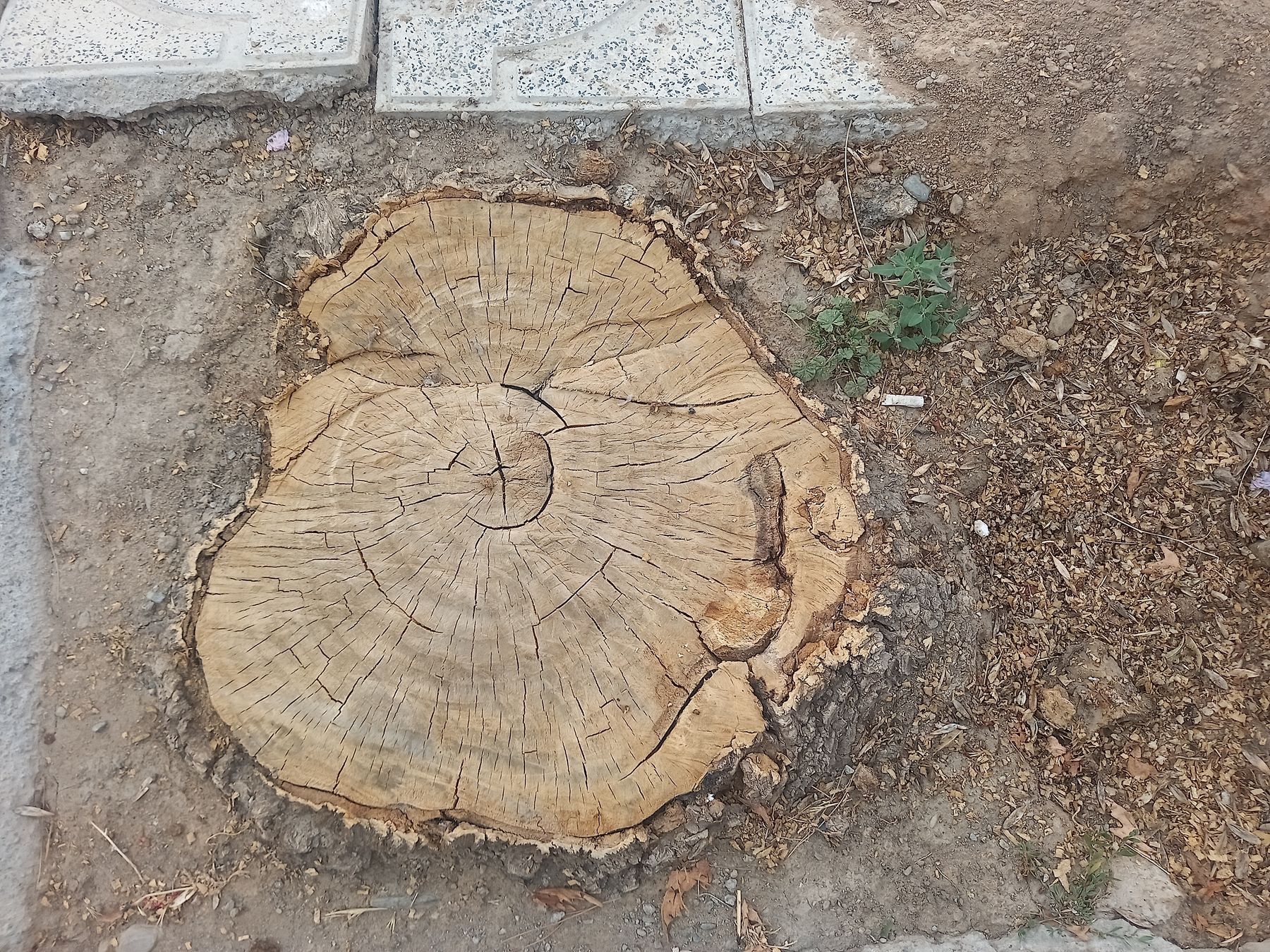
Depth, and why it matters what you plan to do
Grinding to ground level is enough to stop somebody tripping and nothing else. It is not enough to lay sod over, and it is nowhere near enough to plant into.
- Sod or seed: six to eight inches below grade, backfilled with soil.
- Planting a replacement tree: deeper and wider, and honestly, plant beside it rather than into it. A ground stump leaves a volume of decaying wood chips that will keep settling for two or three years.
- Paving, footings or a fence post: deeper again, and worth saying up front because it changes the machine and the time.
Whatever depth is on the scope is what gets written on the card at the end, along with the actual depth reached if something stopped the wheel.
Surface roots
The stump is usually not the whole complaint. What catches a mower is the buttress roots running off it for six or ten feet under the turf. Those can be ground out too, and it is worth deciding at the quote because it is the difference between one pass and a morning.
One caution: on a tree that is staying, cutting surface roots is not cosmetic maintenance. Those roots are structural and they are how the tree stands up. Grinding roots off a living tree to tidy a lawn is a good way to produce a root-plate failure in five years.
Locates, first
Nothing gets ground until utilities are located. A grinder wheel takes out an irrigation lateral, a low-voltage lighting run or a fiber drop without slowing down, and gas and electric services are frequently shallower than anybody expects. Florida’s free locate service is a phone call and a legally required one, and it takes a couple of business days — which is often the real reason a stump is not ground on the same day as the removal.
Private lines are not covered by the public locate: irrigation, landscape lighting, a run out to a well pump, the cable somebody buried themselves. If you know where they are, mark them.
The pile nobody expects
Grindings are wood, air and soil, and they occupy a great deal more space than the solid stump did. A modest stump can produce a mound you would need a wheelbarrow to move several times. There are three reasonable answers and all three go on the quote as separate lines:
- Leave it mounded. It settles over a year or two into roughly the right level. Cheapest.
- Rake it out across the beds as mulch, keeping it off the flare of any nearby trunk.
- Haul it away and backfill the hole with soil. Most expensive, and the only one that leaves a lawn you can immediately sod.
Do not plant into grindings
Fresh wood chips in a planting hole tie up nitrogen while they decompose, because the organisms doing the decomposing take it first. A young tree planted into that competes for the nitrogen it needs to establish, in a hole that is also going to subside. If you must plant in the same spot, remove the grindings, backfill with soil, and give it a season.
What grinding does not do
It does not remove the root system. The roots stay in the ground and decay over years, which is fine — they are not doing any harm down there. But it means two things: the ground over them may settle unevenly for a while, and species that sucker from roots will keep sending up shoots after the stump is gone. Camphor, chinaberry, ligustrum and a few others will do this cheerfully. Those shoots have to be cut or treated as they appear; grinding the stump does not end it.
Access. A grinder needs a way in. The standard machines here are narrow enough for a common gate, but a genuinely enclosed courtyard may need a smaller machine or hand work, and that changes the price rather than the answer.
Grinding, specified
| Item | Detail |
|---|---|
| Depth | Written on the scope by intended use — trip hazard, sod, or planting. Actual depth recorded on the card. |
| Surface roots | Priced as its own line. Decide at the quote, not on the day. |
| Utility locate | Required before the wheel turns. Allow a couple of business days. |
| Private lines | Not covered by the public locate. Mark irrigation, lighting and anything self-buried. |
| Grindings | Left mounded, raked out as mulch, or hauled and backfilled — three separate prices. |
| Replanting | Not into fresh grindings. Nitrogen tie-up plus years of settling. |
| Root system | Stays in the ground and decays. Suckering species will keep sprouting and need separate treatment. |
Figures on this page describe standard practice in the trade, not a price list. Sable Ridge Tree Care is an invented business and quotes nothing.