The thing people mean when they ask for topping.
A reduction makes a tree smaller by shortening its limbs back to branches that are already there and already living. A topping cut makes it smaller by cutting through whatever is in the way. The difference is visible in the tree for the rest of its life.
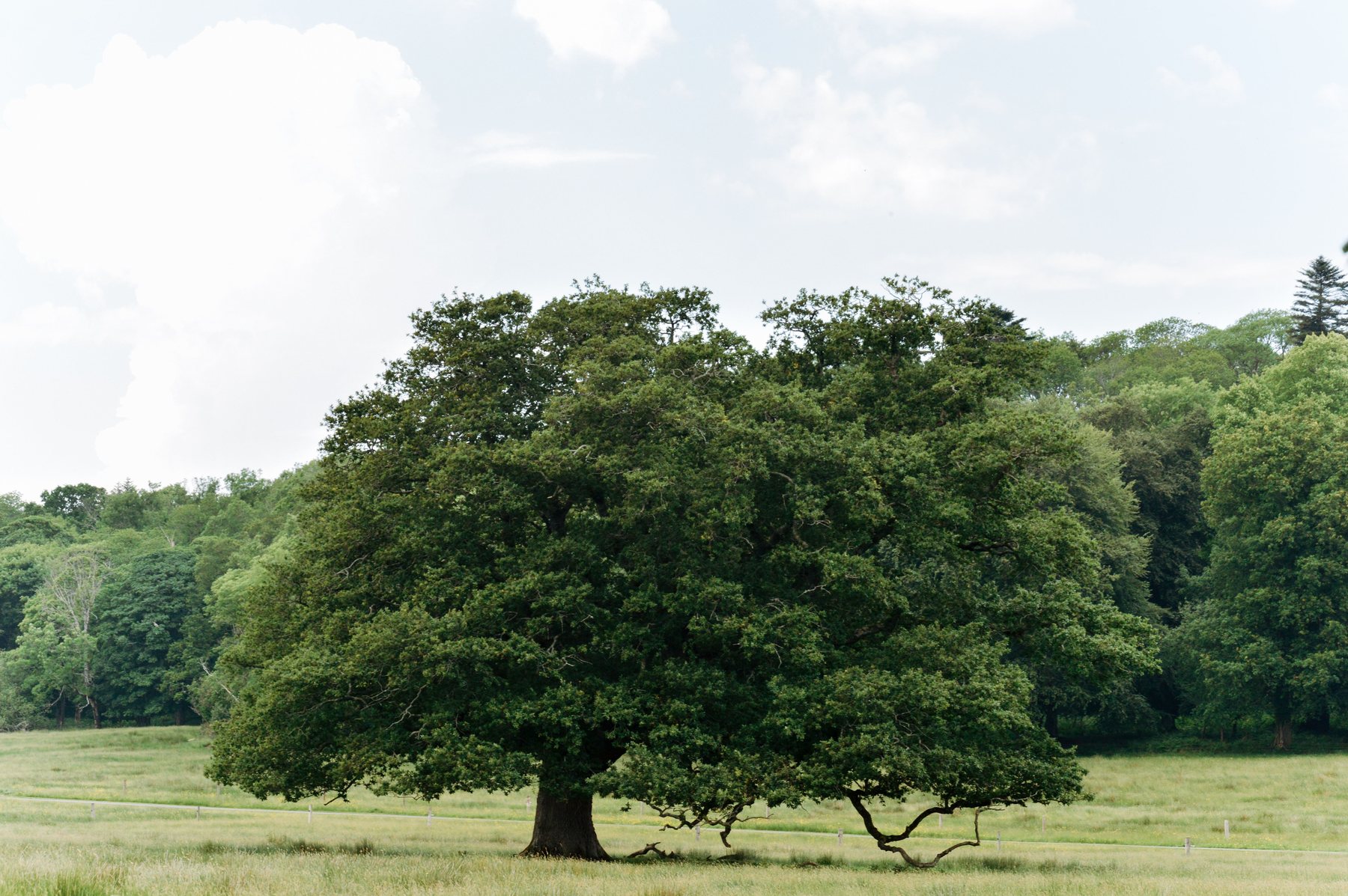
The geometry of a reduction cut
Walk out a limb from the trunk and it forks, and forks again. A reduction picks one of those forks and removes everything beyond it, cutting just above where the surviving side branch leaves. The rule of thumb is that the lateral you leave should be at least about a third the diameter of the stem you removed. Some practitioners work to half.
Why a third: the remaining lateral has to take over. It becomes the new end of that limb, and it has to carry enough sap flow to keep the wood beyond the old union alive and to close the wound. A lateral that is too small cannot do it, the stem behind it dies back, and you have made a topping cut with extra steps.
Done properly the limb is shorter, the end weight is off it, the leverage on the union at the trunk has dropped, and the tree still looks like a tree. The cuts are inside the canopy where you cannot see them from the drive, which is precisely why the practice is hard to sell and the alternative is easy.
Why topping is worse than doing nothing
A topping cut goes through a stem at an arbitrary height with no regard for what is below it. Four things follow, and all four are predictable.
- The wound cannot close. There is no collar at the cut, because a collar only exists at a branch union. A large flat face of exposed heartwood begins decaying and the decay runs down the stem.
- The tree loses the leaves it needed. Removing a large proportion of the crown removes the photosynthetic capacity that would have paid for the repair, at the exact moment the repair bill went up.
- The regrowth is weak. The tree responds by firing dormant buds around each wound — often dozens of upright shoots per cut. They grow fast, because they are drawing on stored reserves, and they are anchored only in the outermost wood of a stub that is already decaying.
- The problem comes back bigger. In five to eight years those shoots are limb-sized, heavy, and attached to rotten wood, above whatever you were worried about in the first place.
ANSI A300 does not recognize topping as a pruning practice. That is not an aesthetic opinion; it is the standard the trade is written to.
When reduction is the right call
- Long, heavy limbs extending over a roof, a driveway or a play area, where the concern is end weight and leverage rather than the whole tree.
- A limb that has grown out horizontally past what its union can reasonably carry — common on live oak, which does this naturally and is mostly fine doing it.
- A tree with a structural defect that is being managed rather than removed, where taking weight off the loaded part buys years. Often paired with cabling.
- Clearance from a structure where raising or thinning will not achieve it.
When it is not
Pines cannot be reduced. Slash pine and sand pine have no meaningful capacity to sprout from dormant buds on old wood. Cut a pine limb back and there is no regrowth from the stub — ever. With a pine the honest options are removing dead wood, removing the whole tree, or leaving it alone.
A tree that is already at its limit. If the crown is thin, the tree is in decline, and the roots have been cut for a driveway, a reduction is another withdrawal from an account that is already overdrawn. Sometimes the correct recommendation is removal, and sometimes it is to do nothing for two years and water it.
Where the target can move. If the risk is a limb over a swing set, moving the swing set is free and permanent. We will say that even though it means we do not get the job.
The crepe myrtle paragraph
Cutting crepe myrtles back to knuckled stubs every February is topping. The knobs are wound response, the shoots are epicormic, and the reason people keep doing it is that the plant flowers anyway and forgives an enormous amount. It still ends up with a thicket of weak wood on a decaying framework instead of the smooth multi-stemmed shape it is capable of. A crepe myrtle that has never been butchered barely needs pruning at all.
Reduction, specified
| Item | Detail |
|---|---|
| The cut | Back to a living lateral at least about one third the diameter of the stem removed. |
| Objective on the scope | A measured clearance or a stated reduction in limb length, per limb. |
| Dose | Counts fully against the 25% seasonal ceiling. Reduction removes live crown by definition. |
| Species that respond well | Live oak, laurel oak, water oak, elm, camphor and most broadleaf trees here. |
| Species that do not | Pines. No dormant-bud response on old wood, so a reduction cut is permanent damage. |
| Not offered | Topping, hat-racking, rounding over, or “taking it down by half.” |
| Typical pairing | Reduction of a loaded limb alongside a cable, where a union with included bark is being managed rather than removed. |
Figures on this page describe standard practice in the trade, not a price list. Sable Ridge Tree Care is an invented business and quotes nothing.