By appointment

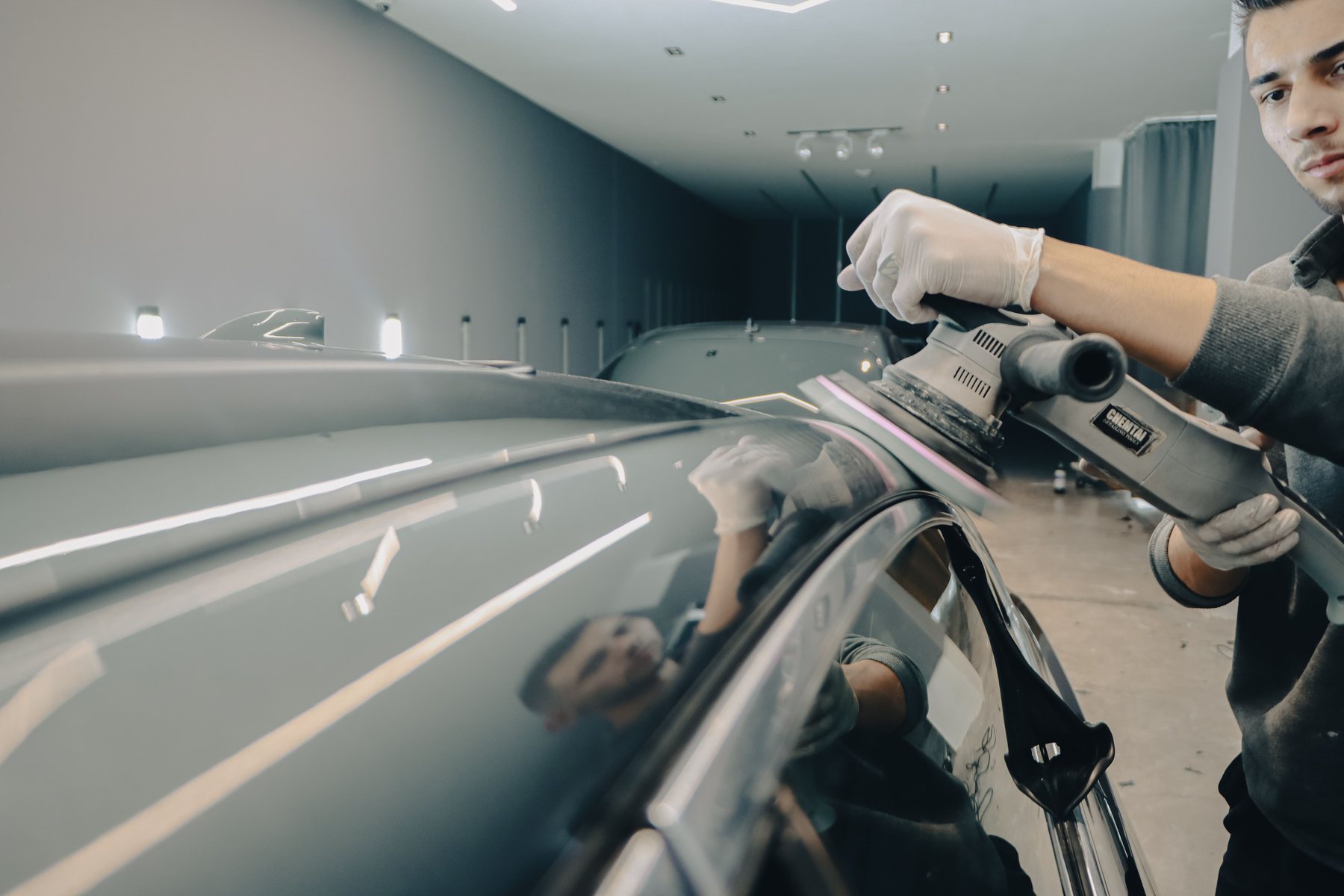
Hand-polishing the paintwork of a dark car with a machine polisher

Car detailing in Tampa. The car you stop apologising for.

Request a slot(656) 236-2374

DeclinedSecond cutting pass, roofRead 78 µm against 110–130.$0.00

What the day actually looks like

You dropped it off dirty. You collected a car you had stopped explaining.

  1. 07:40day one

    You hand it over dirty, on purpose

    Do not wash it first. It is walked in daylight and then under a hand-held inspection light before any of the dirt comes off — road film hides some defects and exaggerates others, and it is useful to see the car the way you see it. Chips, dents, a repaint nobody mentioned, a wheel that has met a curb: all noted before a mitt touches it.

  2. 10:20day one

    The gauge decides the day, not the estimate

    Wheels and arches first, then a contact wash, iron, tar and clay — and only then the paint depth gauge, because it has to read film build rather than the dirt sitting on it. Eleven or twelve panels, three readings averaged on each, written on your sheet before anything is polished.

  3. 11:05day one

    We call, and you get talked out of something

    The roof reads 78 µm against 110–130 everywhere else — a panel already compounded or sprayed thin by somebody. A second cutting pass there buys a little gloss and spends clear coat that does not grow back, so it goes on the report declined, $0.00, with the reason, and that panel is finished by hand. This is the call where you are told to spend less than you offered to.

  4. 16:50day one

    Panel wipe, coat, and then nobody touches it

    Every corrected panel is checked from three angles before the next one is started. Then a dedicated panel wipe strips the polishing oils so the coating bonds to clear coat and not to residue, it is levelled under a light angled to show high spots, and the bay closes on it. It cures overnight with no dew and nothing settling on it.

  5. 08:30day two

    You collect a car you have stopped apologising for

    The wash marring and the drying-towel lines are gone. The two deeper scratches in the right rear door were reduced rather than hidden, and the sheet says so. And the roof still measures 78 µm, because none of it was spent — anyone who puts a gauge on it after us should find the same number.

That is the whole product: a car that looks like the one you chose, and a sheet proving nothing was sanded away to get there — including the line where you asked for more and did not get it.

The document you keep

A paint report, not a receipt.

Every car that goes through the bay is measured before it is touched, and the readings go on your copy. It is the only way you can check, later, that somebody told you the truth about your own clear coat.

Paint report

Job VDS‑2419
12 August 2026
2019 sedan · black metallic
Gauge readings taken before decontamination

Film build, panel by panel

  1. Hood121 µm
  2. L fender118 µm
  3. R fender116 µm
  4. L front door124 µm
  5. R front door122 µm
  6. L rear door127 µm
  7. R rear door119 µm
  8. L quarter130 µm
  9. R quarter126 µm
  10. Decklid115 µm
  11. Roof + A‑pillars78 µm

Total film build over steel, three readings averaged per panel · ◆ flagged low

Work performed

LineAmount
Decontamination. Iron fallout dissolved and rinsed, tar drawn off the lower quarters and behind the arches, then mechanical clay over every painted panel and the glass. Nothing abrasive touches paint until the grit is off it. $145.00
Paint depth survey. Eleven panels, three readings averaged on each, recorded on this sheet before any polishing. No charge — it is how we decide what we are allowed to do. $0.00
Correction, one cutting pass and a refining pass. Ten panels. Wash marring and the drying towel lines are gone. Two deeper scratches in the right rear door were reduced, not removed — the fingernail still catches one of them and it is staying that way. $580.00
Declined Second cutting pass on the roof and A‑pillars — DECLINED, $0.00. Requested and not done.

The roof read 78 µm against 110–130 µm everywhere else, which is a panel that has already been compounded or resprayed thin. A second cut there buys a little more gloss and spends clear coat that does not grow back. We finished it by hand and told you, which is why this line is on your report and not a surprise in two years.

$0.00
Coating applied to corrected panels. Panel wipe, coating leveled and inspected under a swirl-finder, then cured overnight in the bay. Roof coated as well — a coating is protection, not correction, and a thin panel benefits from it more than a thick one. $700.00
Total, work performed $1,425.00

Readings on this sheet are the car’s, not ours — keep it. Anyone measuring the roof after us should find 78 microns, because we did not spend any of it.
Job VDS‑2419 · Verity Detail Studio · 15 Verity Lane, Tampa FL 33602 · (656) 236-2374
Invented example. No such job, car or customer exists.
The numbers the trade would rather not print

Clear coat is finite, and it is countable.

None of this is a secret. It is just inconvenient, because a shop that says it out loud has to stop selling corrections at some point.

40–50 µm

Roughly what the factory clear coat contributes to a total film build of about 110–140 µm on a modern car. The rest is color, primer and e-coat, and none of it is available to polish. The clear coat is the whole budget, and it left the factory the only time it will ever be full.

3–5 µm

What a single aggressive compounding pass with a wool or a heavy foam pad can take off. Do the division: that is a countable number of hard corrections in any car before you are polishing color instead of clear. A shop that promises to make the paint perfect every year is spending something that does not grow back, and it is not spending its own.

0

The number of rock chips a ceramic coating prevents. A coating is a sacrificial layer measured in years of easier maintenance — it makes contamination let go sooner and it resists the chemistry of bird mess and sprinkler water for longer. It is not a force field, it does not stop a stone off a truck on 17-92, and it does not excuse a bad wash. Anyone selling it as armor is selling you a story.

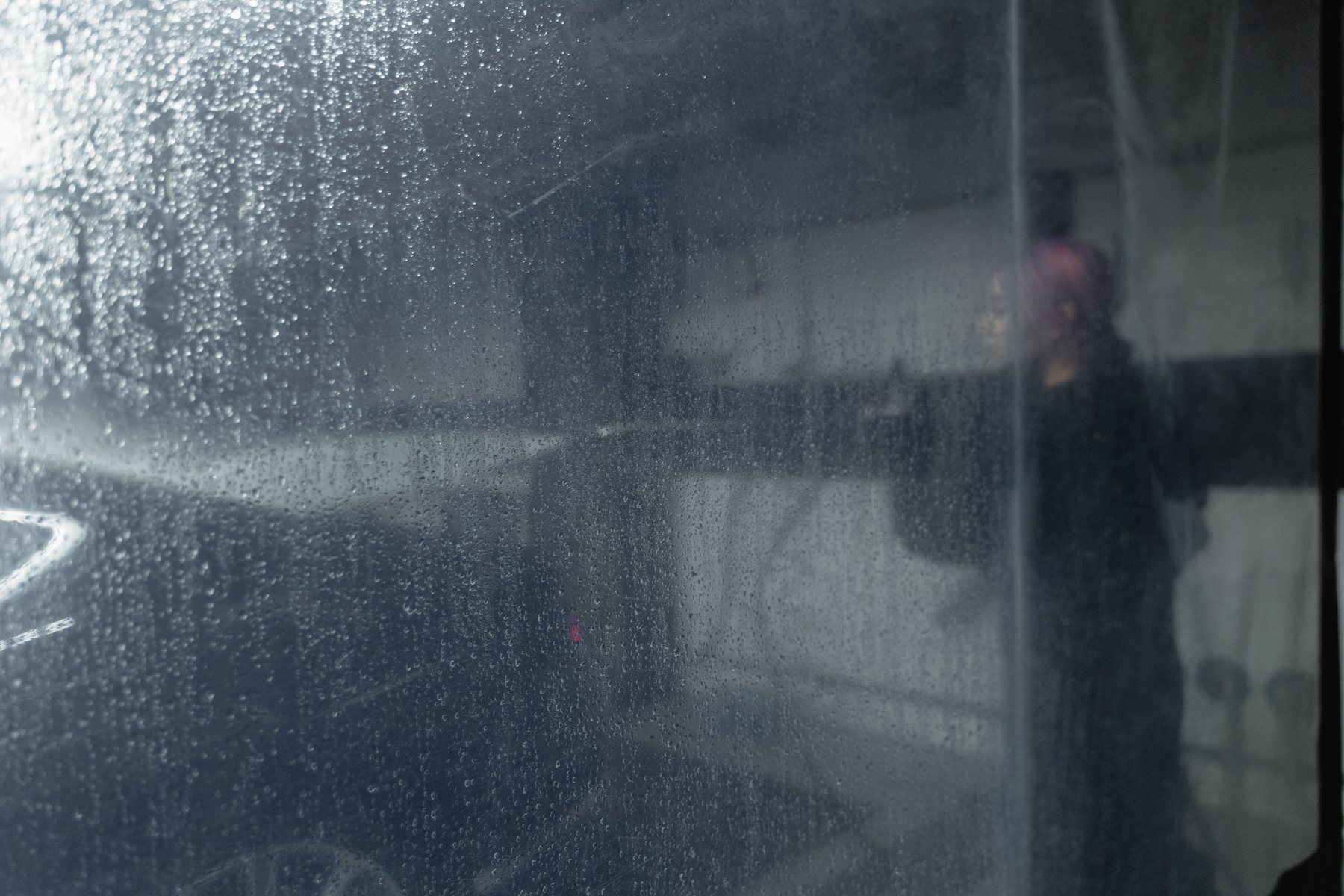
Inside a wash bay, floor still wet
Drawn to scale, from the readings on the report above. The hatched strip at the top of the hood’s clear coat is what one aggressive cutting pass spends: three to five microns, gone. The hatched block over the roof is the 32 to 52 microns it is already short of every other panel on the car, and nothing in this building puts it back. That is the whole argument for the $0.00 line.
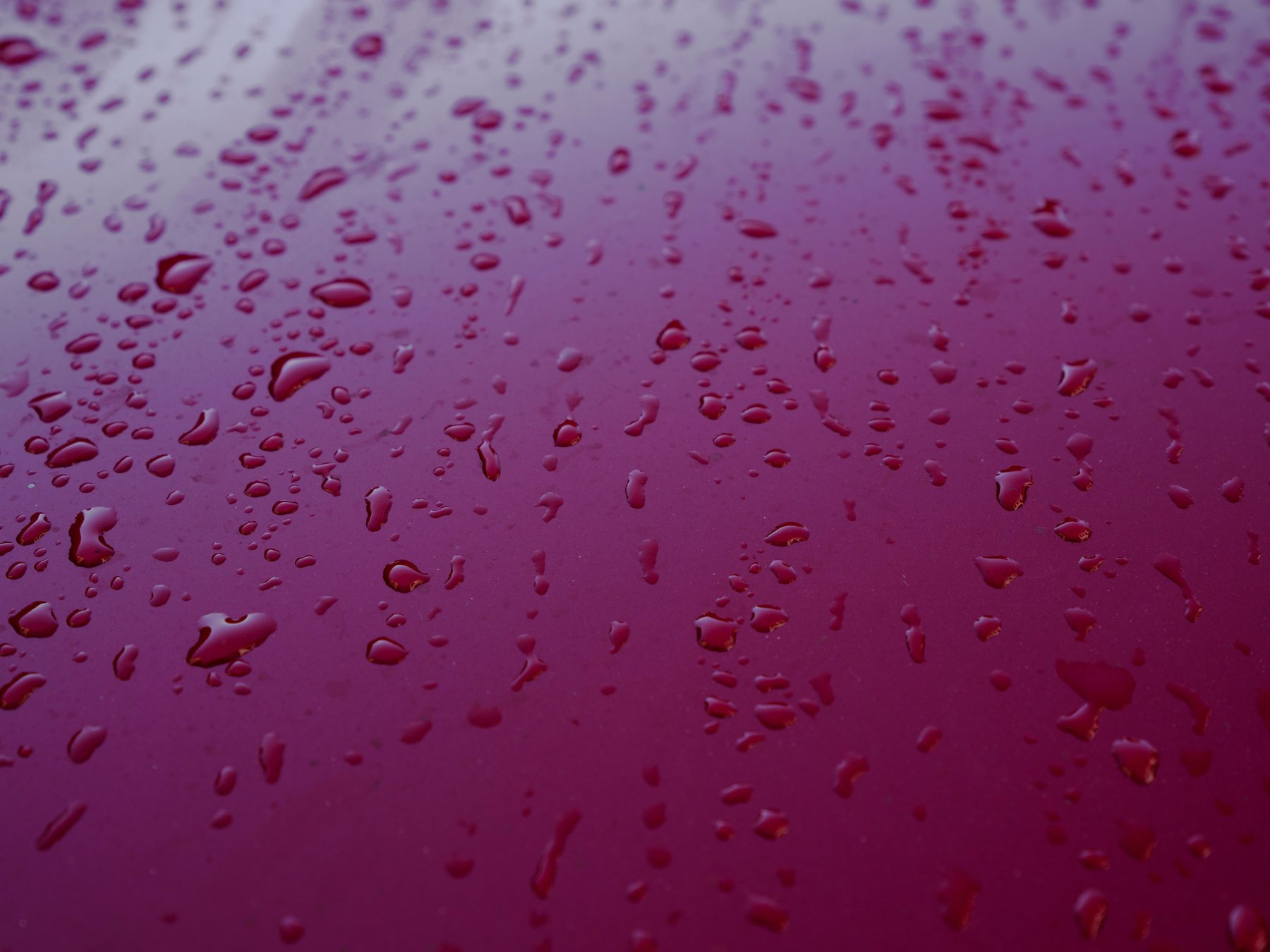
Rain beading into tight droplets on a freshly polished red roof
A swirl and a scratch differ only in depth — and depth is the entire cost. Leveling the clear coat to the bottom of wash marring is a few microns. Leveling it to the bottom of a scratch a fingernail catches is most of what is left. That is why the deep ones get reduced and written down rather than chased.

Which is why we measure first. Every correction here starts with a paint depth gauge, panel by panel, before a pad is even dressed. The readings go on your report. If a panel comes back thin — a repaint, an old compounding, a resprayed roof from a hail claim — it gets refused and finished by hand rather than chased, and the refusal is written down where you can see it.

Four stages, in this order, always

Nothing here can be skipped, and nothing here can be reordered.

Stage one

Decontaminate

Iron fallout — brake dust welded into the clear coat — is dissolved chemically and rinsed. Tar comes off with a solvent and patience, mostly along the rockers and behind the arches where the road throws it. Then clay, panel by panel, on a lubricated surface, until the paint feels like glass through a plastic bag. Polishing a car that has not been decontaminated drags every embedded particle across it under a rotating pad, and you install more scratches than you remove.

The whole menu →

Stage two

Correct

A swirl is a scratch. So is a hologram, so is a towel line, so is the fine haze that makes black paint look gray in the sun. All of them are depth, cut into the clear coat, and the only honest way to remove one is to level the surrounding clear coat down to the bottom of it. That is why depth is the whole conversation, and why we measure before we choose a pad rather than after.

How correction actually works →

Stage three

Protect

A coating is a hard, thin sacrificial film that sits on the clear coat and takes the chemistry first. It also locks in whatever is underneath it: coat a marred panel and you have made the marring a two-year decision. That is the entire reason correction comes first, and the reason we will decline to coat a car we have not been allowed to prepare.

What a coating is and is not →

Stage four

Maintain

Here is the uncomfortable part: the wash is what causes the damage the correction removes. A dirty mitt, one bucket, a brush at a tunnel, a dry towel dragged across a dusty panel — that is where swirls come from, not from driving. Two buckets, a grit guard, a clean mitt per section and a blower or a proper drying towel will hold a corrected finish for years. Get this wrong and you will be back, and the second correction costs clear coat you cannot replace.

The maintenance wash →
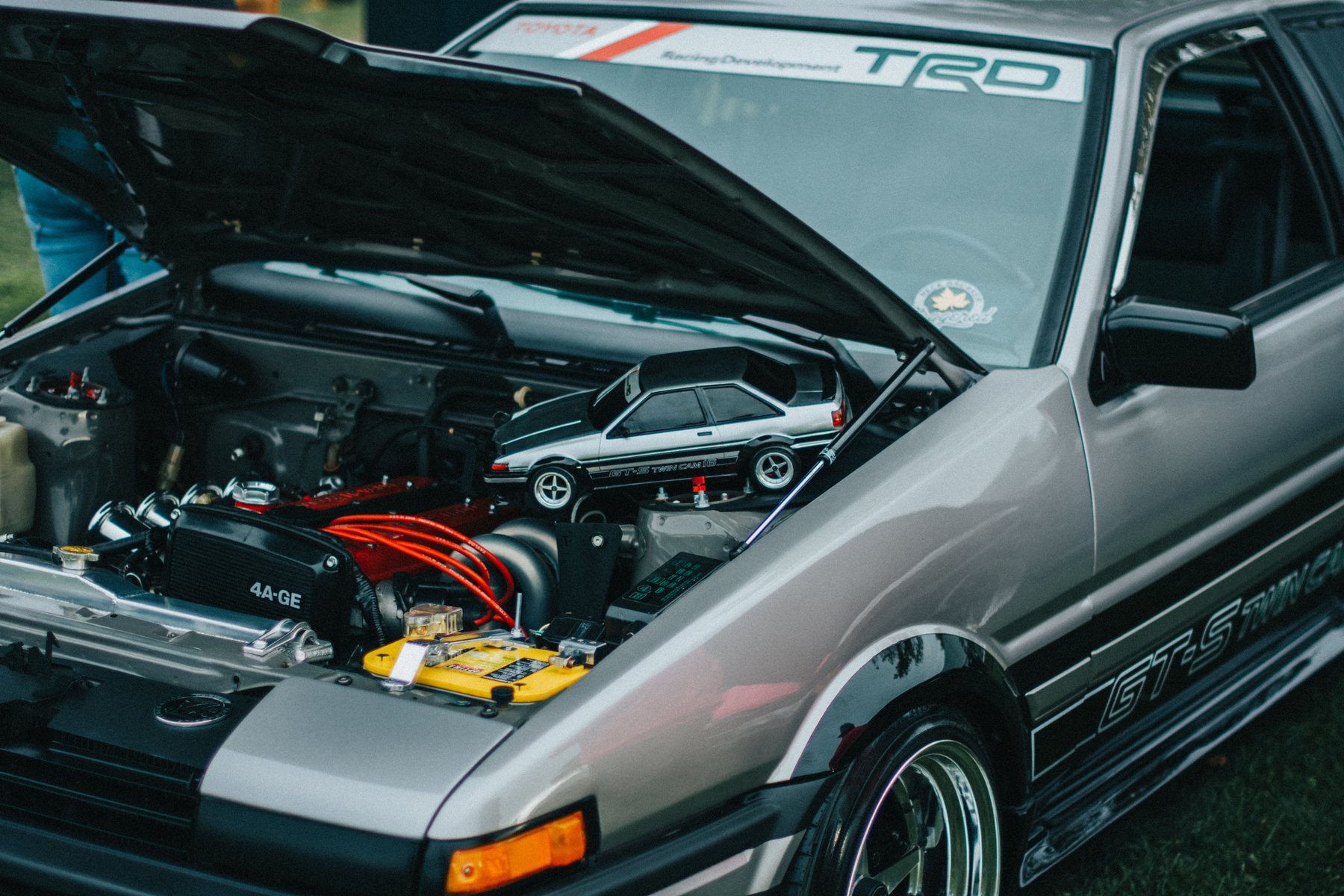
A clean, fully detailed engine bay with the bonnet up
Photograph to be made: the bay at night with the roller door down, one car under the light box, everything else dark. Shot from the corner, no flash, no people. Until it exists this frame holds a drawing of the room and nothing more.

Next

One bay. One car at a time. Tell us what it is doing.

Nothing is booked over a form or a chat window. You describe the car, we look at it, and only then does anyone talk about a day or a number.

Request a slot

Or call (656) 236-2374. 15 Verity Lane, Tampa, FL 33602.