Work · inside
Two different jobs sold under one word.
Getting dust, crumbs and hand-film off an interior is a thorough afternoon. Getting something out of the foam under a carpet is a different trade entirely, involving heat, agitation, extraction and drying time that Florida does not hand out for free.
Two jobs sold under one word
A thorough clean is an afternoon. Heat, agitation, extraction and drying time is a different trade, and it does not always all come out.
The thorough clean
Everything out, including the seats moved through their full travel — the archaeology under a seat rail is where half an interior’s dirt lives. Compressed air and a brush to lift dust out of vents, seams and switch surrounds before any vacuuming, because vacuuming first just moves it. Then a gentle interior cleaner on hard surfaces, agitated with a soft brush and wiped, not sprayed and smeared.
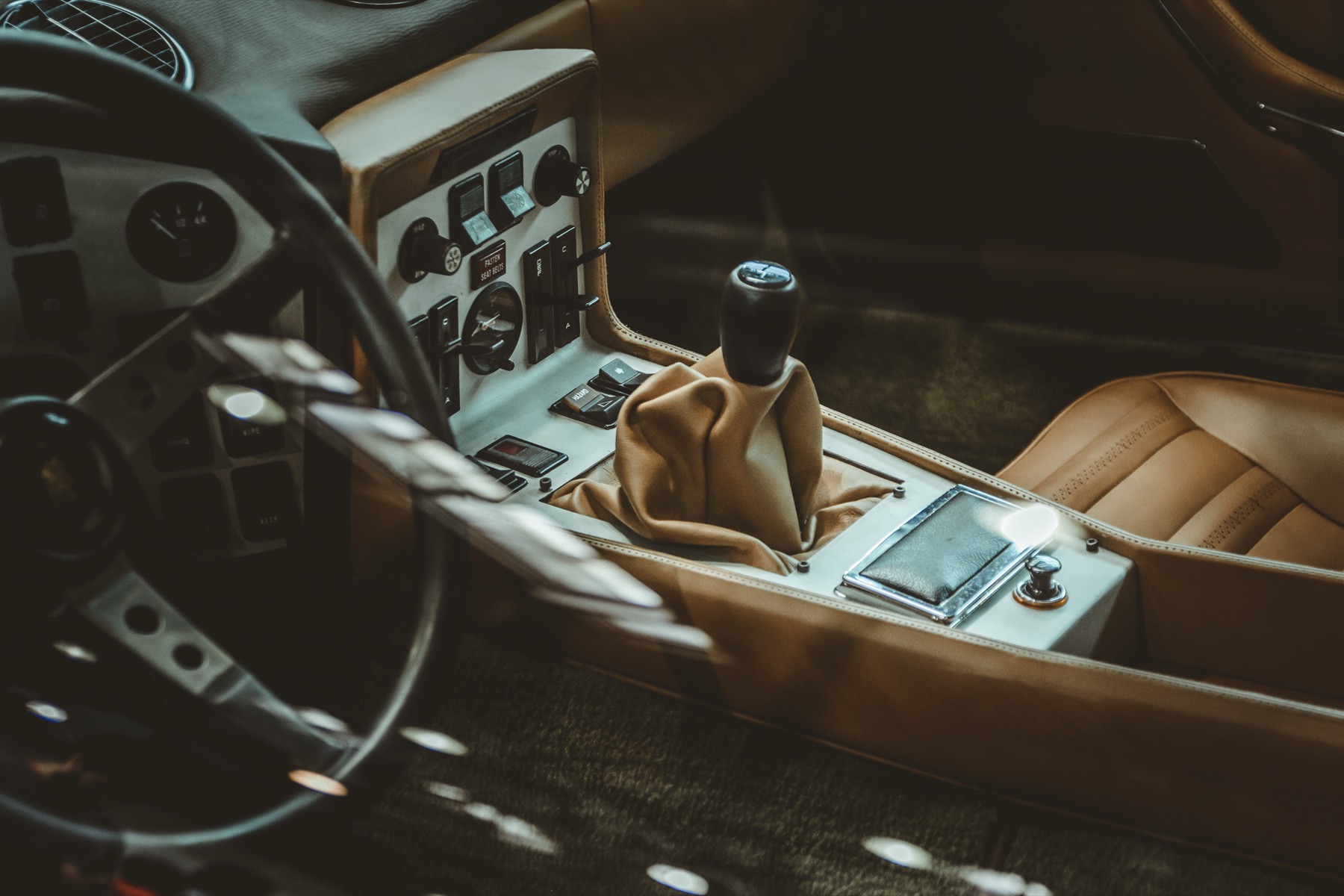
The steering wheel and gear selector get particular attention. What builds up there is skin oil and hand cream polymerized into a slick film, it is genuinely unpleasant once you see it come off on a towel, and it is the single most noticeable thing when someone gets back into a finished car.
Extraction, when it is warranted
Spilled drinks, milk, a dog, a leaking window seal, anything that has gone through the carpet backing into the foam: surface cleaning will not touch it, and covering it with a fragrance makes it worse in a week. Extraction means a cleaner worked into the fiber, agitated, then hot water forced in and pulled back out under vacuum, repeatedly, until what comes back is clear.
Then it has to dry. Properly, with air moving through it and the car open in a controlled space, because a carpet left damp in Florida humidity trades a stain for a smell and the smell is harder to remove than the stain was. If a car is booked in for extraction it is not going home three hours later.
Leather is not skin
Almost every modern automotive leather is pigmented and finished with a urethane top coat. It is a coated surface. It does not drink, it cannot be fed, and the greasy dressings sold to nourish it simply sit on the coating, attract dust, and make a seat shiny and slippery. What actually preserves it is removing the abrasive grit and body oils that wear the top coat through — a pH-appropriate cleaner, a soft brush, a wipe, and a matte protectant with UV resistance if anything at all. Cracking in an old seat is that coating failing, and no conditioner reverses it.
Odor
Smell is a source problem. Find the source or you are only masking. Common ones: the cabin filter, damp in the carpet or under a mat, spilt liquid in a door pocket, a rodent in the ventilation, or smoke that has settled into the headliner and every soft surface at once. Smoke is the honest hard case — it can be reduced substantially and is very rarely eliminated from an older interior, and anyone promising otherwise has not lived with the result.
Headliners, and why we are careful
A headliner is fabric glued to foam glued to a board. Over-wet it and the adhesive lets go, and a sagging headliner is an upholstery job, not a detailing one. They get cleaned lightly, from the edges in, with as little moisture as will do the work.
Interior gallery · no images on this site
Nothing here, on purpose. A cleaned interior next to a filthy one is the other great before-and-after of this trade, and an invented pair would be an invented result.
On a live site these would be the studio’s own cars, with the owner’s permission and the registration out of frame.