Work · protection
It preserves whatever it finds.
That is the useful thing to understand about a coating, and the reason it is the last step rather than a product you buy on its own. Put it over a corrected panel and you keep a corrected panel. Put it over swirls and you keep the swirls, sealed in, for as long as the coating lasts.
Sequence is the whole thing
A coating preserves whatever it finds. Put it over marring and you have made the marring a two-year decision.
What it is
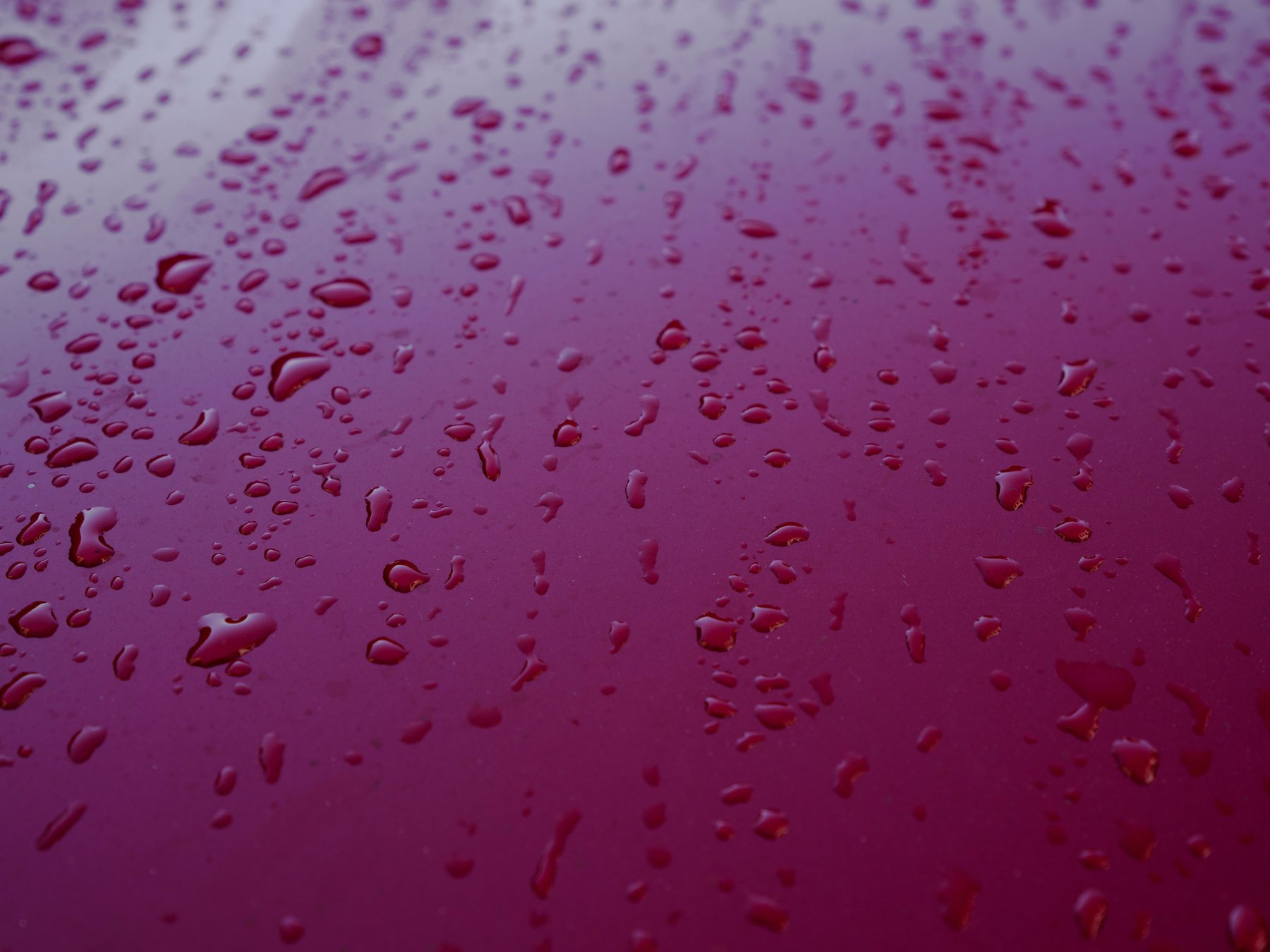
A liquid that cross-links into a hard, glass-like film a few microns thick and bonds chemically to the clear coat rather than sitting on it like a wax. It is slick, it resists UV and mild acids, and it is sacrificial: it is there to be consumed instead of your paint. Everything on the what a coating covers page applies here — particularly the part where it stops exactly zero rock chips.
The preparation is most of the job
- Decontamination. Iron, tar, clay. A coating bonded over embedded fallout is bonded over a defect that is still there and still growing.
- Correction, to whatever level the readings allow. Not necessarily perfection — an honest ninety per cent on a car with limited clear coat is a better outcome than a hundred per cent that spends the last of it.
- Panel wipe. A dedicated solvent over every panel to strip polishing oils, and then again on anything touched afterwards. This is the step that gets skipped when a shop is behind, and it is the reason coatings fail in patches three months later: they never bonded, they sat on residue.
- Adjacent surfaces. Glass, wheels and trim get their own products if they are being coated. Trim is the one people forget, and it is where the visual difference is most obvious a year on.
The application
Small sections, an even wet film, and then leveling before the coating flashes — the working window is short and shrinks in heat, which is one of several reasons this happens indoors in Florida. Every section is checked immediately under a light held at a low angle, because that is the only way to see a high spot: an area where the coating was not leveled and has cured proud, which looks like an oily rainbow smear in sunlight and can only be removed by polishing it off. Polishing off a high spot spends clear coat, so it is far better not to leave one.
The cure
The bay closes and the car sits. A coating goes through its initial cure in the first several hours and keeps hardening for days after that, and during the early part it will take an impression of anything that lands on it — dew, dust, a fingerprint on a door handle, rain. That is why coating work is never a same-day hand-back, and why anyone offering one in an open driveway is describing a different outcome from the one you think you are buying.
Afterwards
- Leave it dry for the first stretch after collection. No rain if you can help it, no sprinklers, and nothing wiped off dry.
- First wash after a week, by hand, pH-neutral shampoo, two buckets. Not a tunnel, ever.
- No wax over it. Conventional wax smothers the surface chemistry and makes a perfectly good coating look like it has stopped working.
- Bird mess and bug remains come off promptly. Far more forgiving than bare clear coat; not indefinite.
- A decontamination once a year keeps the surface behaving. Beading dropping off is usually contamination sitting on the coating, not the coating failing.
The one we turn down. A coating on an uncorrected car, requested to “protect it as it is”. It works exactly as advertised and it is still the wrong purchase, because you have paid to make the current condition of the paint a multi-year commitment. Correct first, or coat later.