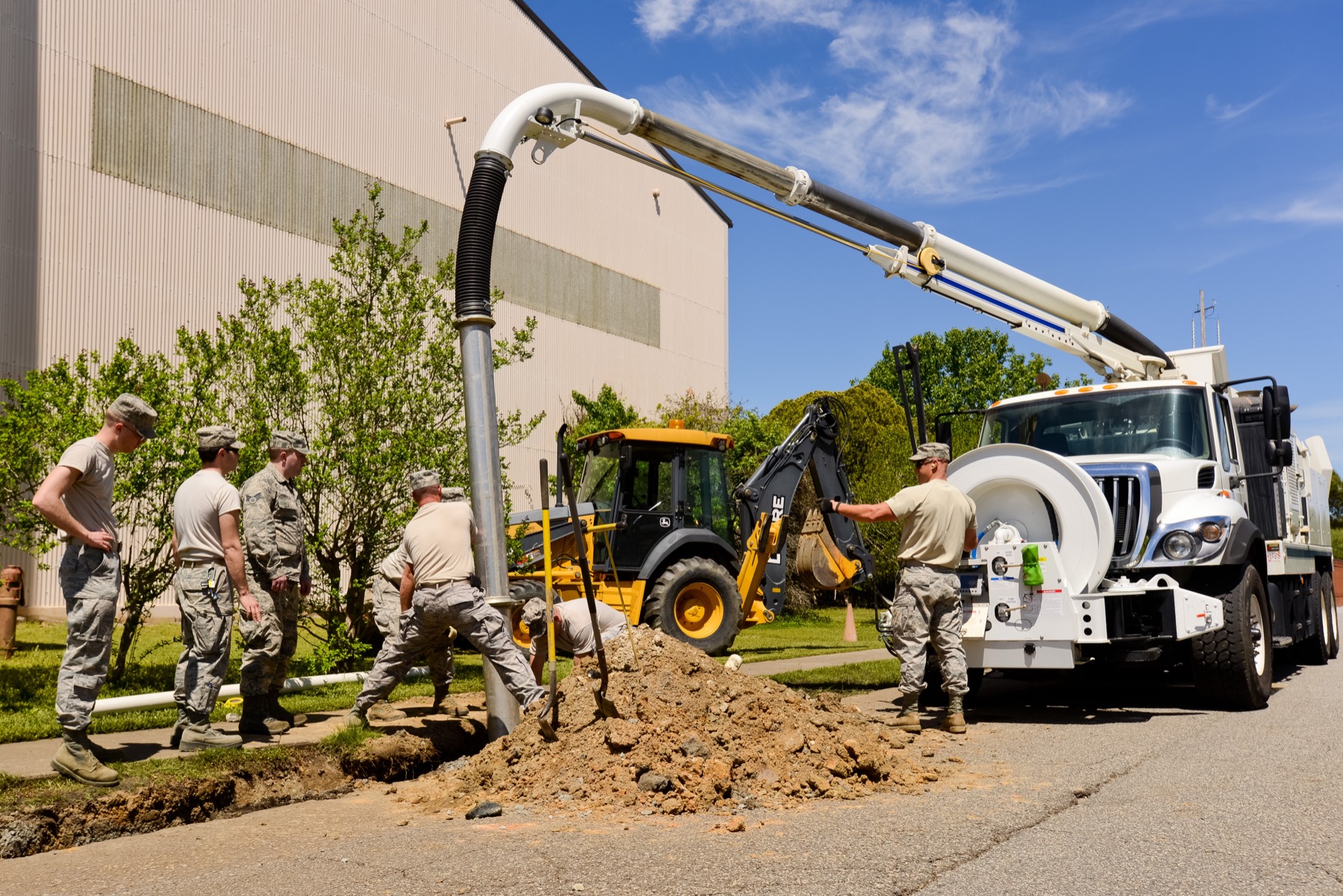
Drain and sewer in Casselberry. The visit where somebody finally looks inside it.
$0.00
A cable cannot close the open joint at 47.5 ft.
$0.00
A cable cannot close the open joint at 47.5 ft.
A cable opens a line. It does not tell you why the line closed, and on a drain that has backed up more than once that is the only question worth paying for. So this is the whole run, as it was written down, in the order the camera saw it, with every root, every joint and every inch of standing water pinned at the foot mark it was found at and the depth it was found under. The customer stood at the screen for all of it. Two of these ten entries are defects; one of them is why the line keeps backing up, and it is not the one people expect.
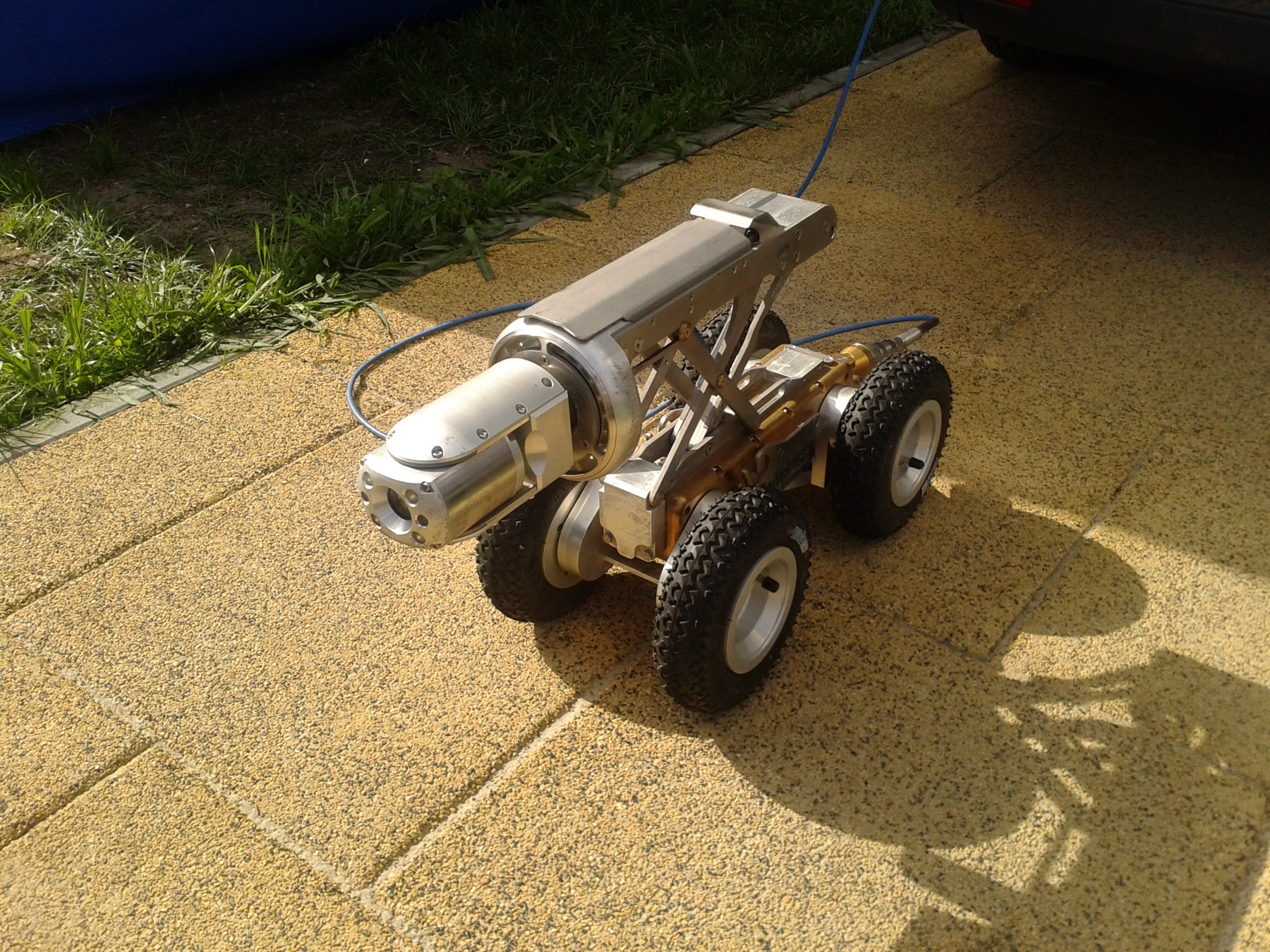
Four-inch cleanout at the south foundation wall, cap off, camera in and pointed downstream toward the city main. A two-way cleanout is the difference between this visit and one that starts by pulling a toilet, and it is the single biggest reason one drain bill is twice another.
AccessCast iron under the slab, clay from the foundation out — ordinary for a 1974 house here. It matters because the two fail in completely different ways: iron corrodes from the inside and channels out along the bottom, clay stays hard and fails at its joints. From here on this run is joints.
TransitionHair roots through a bell joint, taking up something like ten per cent of the cross-section. Worth writing down and not worth digging for. Clay comes in short sections, so there is a joint every two to three feet, and somewhere along a run this long there is nearly always one of these.
Noted, not a defectRoots cut off square, bright scoring around the pipe wall: this is where the cable has been, twice, in March and again in July. The cable did exactly what a cable does. Nothing here explains why the roots came back in four months, and this is not the place that is letting them in.
Evidence of prior workThe picture goes green and the head is submerged. Water does not stand in a pipe that falls the whole way; it stands where the pipe stops falling. The invert here is level with the lip at the far end of the sag, which is what sets how deep the water stands. This is the upstream lip, and from here to 41.0 ft we are reading through water.
Water beginsThe bottom of the belly. Two inches of water sitting permanently in a four-inch bore is half the pipe gone before anything is flushed into it, and it is where solids stop and paper collects. The cause is under the pipe rather than in it: bedding that settled after the line was laid. No cable and no jet lifts a pipe back up.
Bellied lineThe head comes up dry. The belly is fourteen feet long and about two inches deep at worst. On a four-inch building sewer the code allows as little as an eighth of an inch of fall per foot, which is why two inches of dip is a great deal — there was almost no slope to lose.
Water endsOne section has dropped at its bell and left a lip standing proud across the bottom of the pipe, about three eighths of an inch of it. Paper catches on the lip. The joint is open to the soil, which is how a root found it, and it is the only opening on this run big enough to explain four months. Sonde in the camera head, receiver on the grass: forty-one inches down, six feet off the front walk, painted and flagged.
This is the causeSeventeen feet of pipe with nothing wrong with it. That is worth saying out loud, because the quote a customer usually gets after a camera run is for the whole line. Most of this line does not need replacing.
SoundCamera out. Sixty-three feet, recorded, and the copy of the recording goes with you — which is what makes any of the above checkable by the next contractor who reads it.
End of run| Work performed | Amount |
|---|---|
| Camera inspection, cleanout to city main 63.0 ft, recorded, footage counter on the picture. Ten observations logged against distance and depth. Copy of the recording left with the customer. | $189.00 |
| Sonde locate and surface mark — the 47.5 ft point Transmitter in the camera head, receiver walked over the lawn. Marked in paint and flagged: 41 in deep, 6 ft off the front walk. A repair now has a hole to dig rather than a trench to guess at. | $95.00 |
| Main line cabled, 3 in cutter head, 0–52 ft The line was slow today and it needed opening today, so it was opened. Camera re-run 0–52 ft afterwards to confirm the cut roots went through to the main rather than being left in the pipe for next week. | $265.00 |
| “PUT US ON THE QUARTERLY CABLING” — DECLINED Requested and not done. See the note on this report. | $0.00 |
| Foaming root treatment — not sold It kills root ends inside the pipe. It does not close the joint they are coming in through, so the next ones arrive on the same schedule. We would be selling you a smell. | $0.00 |
| Hydro-jetting this run — not done, and not offered You do not put a jet down an old clay line with a known open joint in it. The jet is looking for the weak point and it will find it. When the joint at 47.5 ft is repaired, jetting the run becomes a sensible thing to discuss. | $0.00 |
| Spot repair at 47.5 ft — quoted separately Roughly six feet of clay out, PVC and two shielded couplings in, at the flag. Written quote, no charge for it, and no charge today. The belly at 27.0–41.0 ft is a different and longer dig and is deliberately not bundled into it. | $0.00 |
| Total | $549.00 |
AS LEFT — full-bore flow from the cleanout · camera re-run 0–52 ft · roots carried through to the main · belly at 27.0–41.0 ft unchanged and will not change · offset at 47.5 ft unchanged and will not change without a dig · recording and locate sheet handed over.
“Roots in the line” is not a finding, it is a symptom with the location removed. Every camera has a footage counter burned into the picture; every locator gives a depth in inches. A report written with both can be handed to a second contractor, who can put his own camera in and either agree or disagree at 47.5 ft. A report written without them cannot be checked by anybody, including by us next year.
It is also the difference between a six-foot hole and a trench. The dig at the flag is priced off a known depth in known ground. A repair quoted from “somewhere in the front yard” has the uncertainty priced into it, and the customer pays for that uncertainty whether or not it turns out to be there.
“PUT US ON THE QUARTERLY CABLING” — DECLINED, $0.00. Asked for, and not done. Four cablings a year at $265 is a little over a thousand dollars every year, for as long as the house stands, to keep cutting roots out of a joint that is standing open forty-one inches under the front lawn. The roots are not the problem. The opening is the problem, and a cable leaves it exactly as wide as it found it.
That is the whole business model this trade is mistrusted for, and it is easy money: the customer is relieved every single time, the line drains that afternoon every single time, and nobody ever finds out what was actually wrong. A recurring charge for a defect that was never diagnosed is not a maintenance plan. It is a subscription to the same afternoon.
None of which makes the cable worthless, and we are not going to pretend otherwise. There was water standing in a shower pan this morning and it needed to be open today, so it was opened today and it is on the bill. What is not on the bill is the schedule. Our honest number for this line is three to five months before it slows again, and we would rather the next $265 went into the six-foot hole at the flag.
The washing machine drains and water comes up in the shower next to it. That is not a shower problem. Everything in the house leaves through one pipe, and when that pipe is blocked the water finds the lowest opening inside — which is nearly always a shower pan or a floor drain.
A third cabling, and then a fourth in the winter. The office says yes to opening the line today and no to selling you a schedule for a fault nobody has looked at. That request goes on the report declined, at $0.00, with the reason written next to it.
Camera in at the cleanout, footage counter running in the corner of the picture. You see the fine roots at eleven feet, the cable marks from July at eighteen, and the moment the picture goes green and the head goes under water at twenty-seven.
An offset joint at 47.5 feet, forty-one inches down, six feet off the front walk — found on the screen, then located from the surface and painted on the grass. The thing that has been costing you $265 twice a year is now a spot you can stand on, and a repair with a hole to dig instead of a trench to guess at.
Cabled, re-run on camera to prove the roots went through to the main, and told plainly: three to five months, not forever. You are holding the recording, the run sheet and a quote for the six feet of pipe that would end it.
That is the whole product: a line that is open today and a reason you can point at — including the seventeen feet at the far end that are in perfectly good order. Nobody quoted you for those, and that is the half of a camera report the trade usually leaves out.
Every drain camera made in the last twenty years puts a distance counter on the picture. If a company runs a camera down your line and the report comes back saying “roots present” with no number beside it, they had the number on screen and did not write it down. Ask for the recording and ask at what foot.
A finding without a distance cannot be dug to, cannot be checked, and cannot be compared to next year's run.
A transmitter sits in the camera head and a receiver above ground finds it. That gives two things: a mark on the lawn you can stand on, and a depth in inches. Both belong on your paperwork, because both are what a repair is priced from.
And before anybody digs, the free utility locate gets called — in Florida that is Sunshine 811, two full business days ahead. A contractor who wants to dig tomorrow morning is telling you something.
A four-inch building sewer is allowed as little as an eighth of an inch of fall per foot of run. That is a slope you cannot see by eye, and it is the reason a two-inch dip matters so much: over fourteen feet there was never more than about two inches of fall to lose in the first place.
It is also why “it just needs cleaning” is the wrong answer on a bellied line. Nothing you put down a pipe changes its slope.
We will not sell a recurring cabling on a line we have not looked at. We will not quote a full line replacement off one bad joint when the camera showed seventeen feet of sound pipe at the far end. We will not jet an old clay or thin cast-iron line before somebody has seen the inside of it. We will not price a repair from a photograph or over the phone. And we will not tell you a cleared drain is fixed when the run sheet says it is bought time.
None of that is generosity. It is that a run sheet with distances and depths on it can be checked by the next contractor who reads it, and we would rather it held up.
It cannot see through water, which is why the fourteen feet of belly on this run were read as “submerged” rather than as clean pipe. It cannot see the outside of the pipe, so it cannot tell you how much soil has washed out around an open joint. It cannot measure slope precisely on its own — it tells you where water stands, which is a different and blunter thing.
And it cannot make a decision for you. Plenty of people look at a run like this one and choose to keep cabling it, and that is a perfectly reasonable decision when it is made knowing what it costs. It should just never be a surprise.
A symptom is not a diagnosis and none of these pages will pretend otherwise. Each one says what the possible causes are, which observation separates them, and what has to be seen before anybody can honestly give you a price.
One licensed trade owner who still runs calls, and two trucks covering Seminole County and the north edge of Orange. Every truck carries a camera and a locator, not just a machine, because the difference between this company and the one the customer called last time is entirely a matter of whether anybody looked.
We publish our run sheets and our declined lines, and we do not publish ratings, review counts, job counts or awards, because inventing those is exactly the kind of thing this page exists to argue against. More about how we work →

Tell us what it is doing. The office will call you back to agree a time, the camera goes in before anybody quotes a repair, and you keep the run sheet and the recording.
Scripted demonstration. It cannot book, hold or confirm a time, and it will not quote a price.