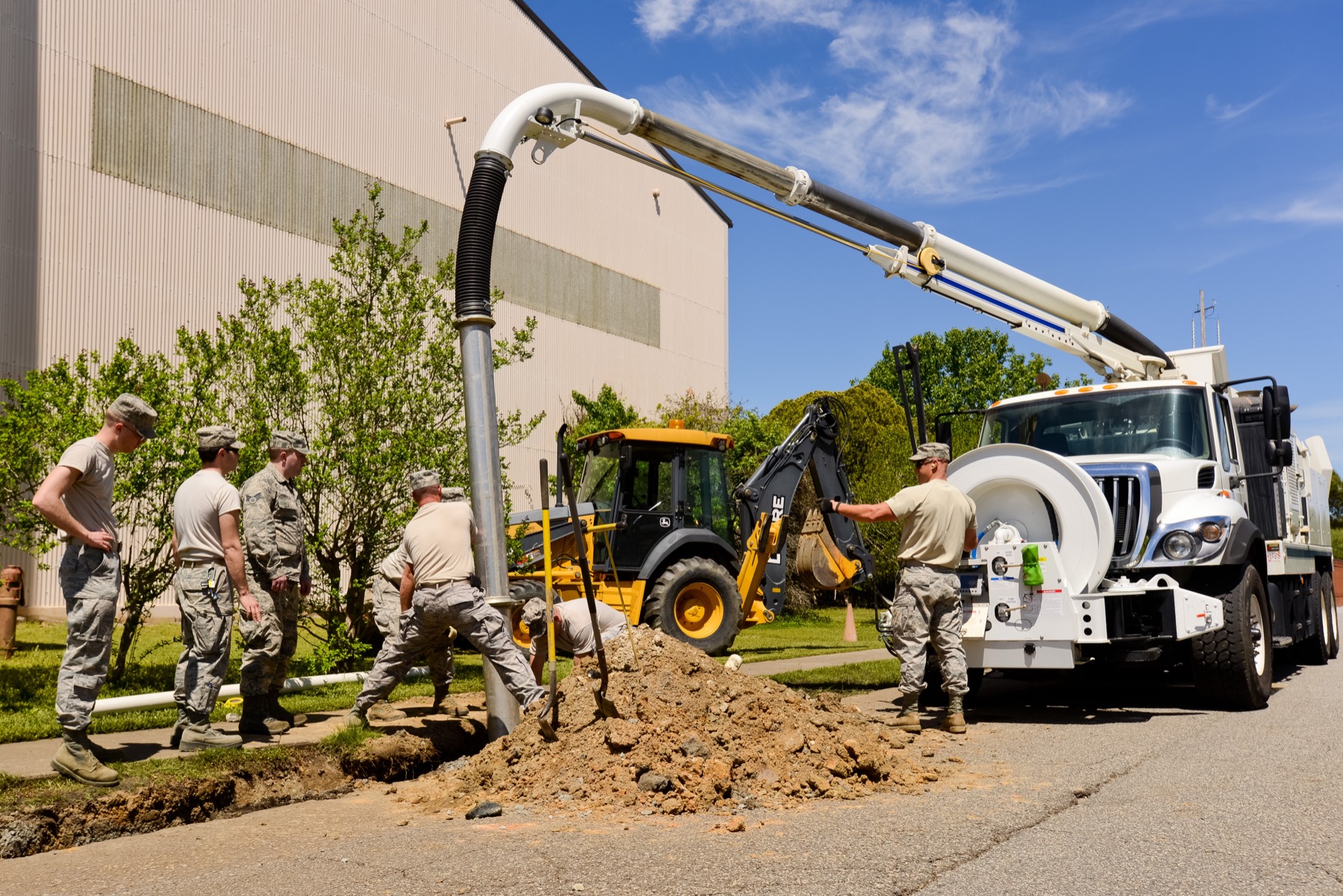
Most of a bad line is usually good pipe. A camera run that ends in a quote for all of it should be read very carefully, including one of ours.
When a run is read on camera and one joint at a known footage is the thing letting roots in, the repair is that joint: a hole at the flag, the bad section out, new pipe and shielded couplings in, backfilled and compacted. Six feet of trench instead of sixty. The rest of the line is not improved by digging it up, and it does not become better pipe for having been quoted.
The case for replacing a whole run is a different case and it has to be argued on its own: material that has failed along its length, a collapse, repeated defects at several points, or a run so shallow and so old that the next repair is close behind this one. We will make that argument if it is true. We will not make it because the camera was already on the truck.
| Method | What it is good at | What it cannot fix |
|---|---|---|
| Open cut, spot repair | One known defect at a known depth | Nothing — but it costs surface you have to make good |
| Open cut, full replacement | Grade. It is the only method that resets fall | Being cheap, or being quick, or leaving a lawn alone |
| Pipe bursting | Replacing a straight run with two small pits | A line with a collapse or hard bends in the way |
| Cured-in-place lining | Sealing joints and cracks without a trench | A belly. A liner follows the host pipe, so the sag stays |
That last row is the one worth reading twice. Lining is a genuinely good technology and it is sold hard, and it does not lift a pipe. If the report says standing water and the quote says lining, the standing water is still going to be there afterwards.
A four-inch building sewer is allowed as little as an eighth of an inch of fall per foot. There is almost nothing in reserve, which is why a couple of inches of settlement over fourteen feet turns a working line into one that catches. A replacement done properly is not really about the pipe; it is about bedding it so that the fall is right and stays right, which is the part nobody photographs.
A utility locate is called and waited for — Sunshine 811, free, two full business days. Where a permit applies, it is pulled in our name and the inspection happens before the trench is closed, because a closed trench is very expensive to re-open and a customer should never be asked to take that on trust. And you are told what the ground will look like afterwards: sod, irrigation lines, pavers, driveway. That part gets written down too.
Ask for a visit and the office will call you back to agree a time. Nothing is priced before somebody has seen it, and you keep whatever we write down.
Scripted demonstration. It cannot book, hold or confirm a time, and it will not quote a price.