A camera that is not writing down distances is a television. The run sheet is the product: what was found, at what footage, under how many inches of ground.
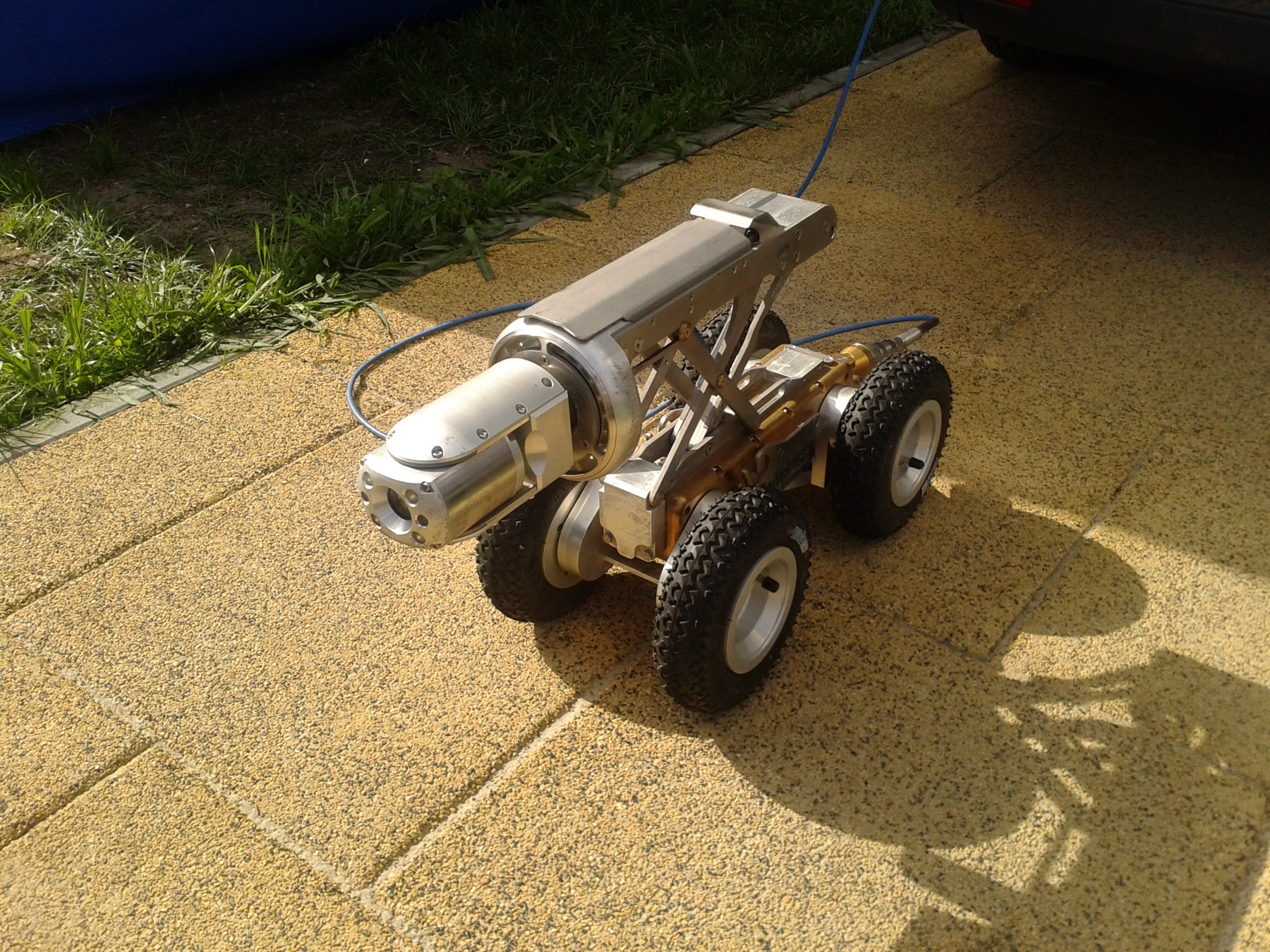
A self-levelling camera head on a stiff push rod goes in at the cleanout and is fed down the line. The picture carries a footage counter, so every single thing seen has a distance attached to it. The head also carries a transmitter — a sonde — which a receiver above ground can find, giving a mark on the lawn and a depth in inches.
That second half is the half most people never get, and it is the half a repair is priced from. Knowing there is an offset joint is interesting. Knowing it is at 47.5 feet and forty-one inches down, six feet off the front walk, is the difference between a six-foot hole and a trench across a garden.
| Written down | Why it has to be there |
|---|---|
| Start point and direction | “From the cleanout, downstream”. A run described from the wrong end is unrepeatable. |
| Total distance run | Tells you how much of the line was seen — and how much was not. |
| Pipe material, and where it changes | Cast iron and clay and PVC fail differently. The transition point is a real location. |
| Every observation, at its footage | A finding without a distance cannot be dug to and cannot be checked. |
| Depth at any defect, in inches | What the repair is priced from, and what tells you if anything else is in the way. |
| Where water stands, and how deep | Standing water is the signature of a sag, and its length is the size of the problem. |
| What was not seen | Submerged pipe is not clean pipe. Saying so is the difference between a report and a sales tool. |
You should leave with the recording. We hand over a copy as a matter of course, because a recording is what lets the next contractor disagree with us.
It cannot see through water. In a bellied line, the camera goes under and the picture is green, and a fourteen-foot section gets written down as “submerged” rather than as sound pipe — because nobody knows. It cannot see the outside of the pipe, so it cannot tell you how much soil has washed out around an open joint. It does not measure slope; it tells you where water sits, which is a blunter and more useful thing. And it cannot see past a full blockage, so on a line that is actually stopped, the cable goes first and the camera goes second.
A first-time block on a PVC line with an obvious cause — a wipe, a toy, the thing you can already see on the cable — does not need a camera, and offering one is an upsell with a lens on it. We run the camera when the line has done this before, when the house is old enough for the material to be in question, when a repair is about to be quoted, or when somebody is buying the house and wants to know what is under the lawn before they own it.
Our sonde finds our pipe. It does not find the power, gas, water, cable or irrigation that may be crossing it. A utility locate is free and is called before any excavation — in Florida that is Sunshine 811, and it wants two full business days. A contractor who wants to put a machine in your lawn tomorrow morning is telling you something about how they work.
Ask for a visit and the office will call you back to agree a time. Nothing is priced before somebody has seen it, and you keep whatever we write down.
Scripted demonstration. It cannot book, hold or confirm a time, and it will not quote a price.