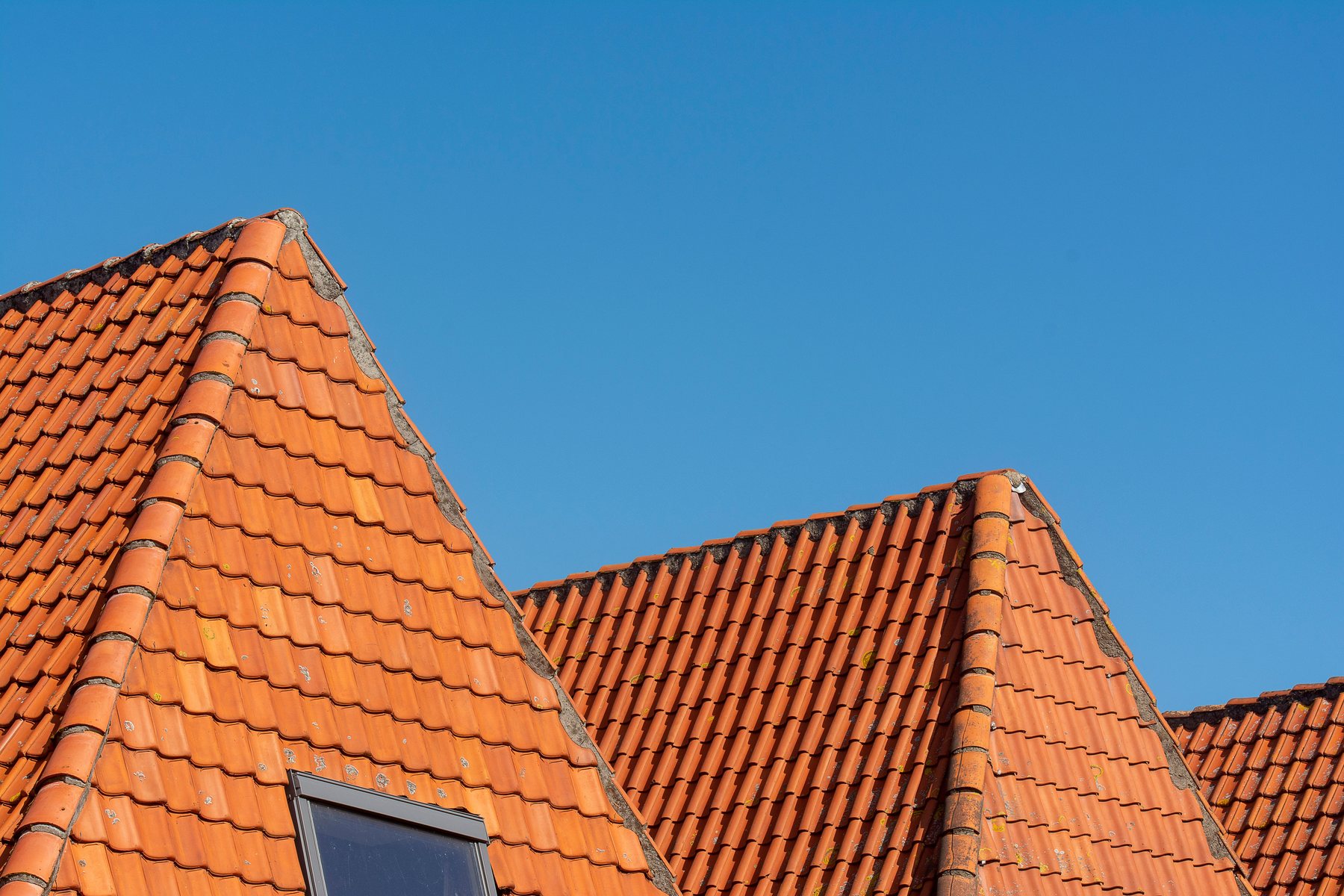
Roofing in Apopka. You keep the report.
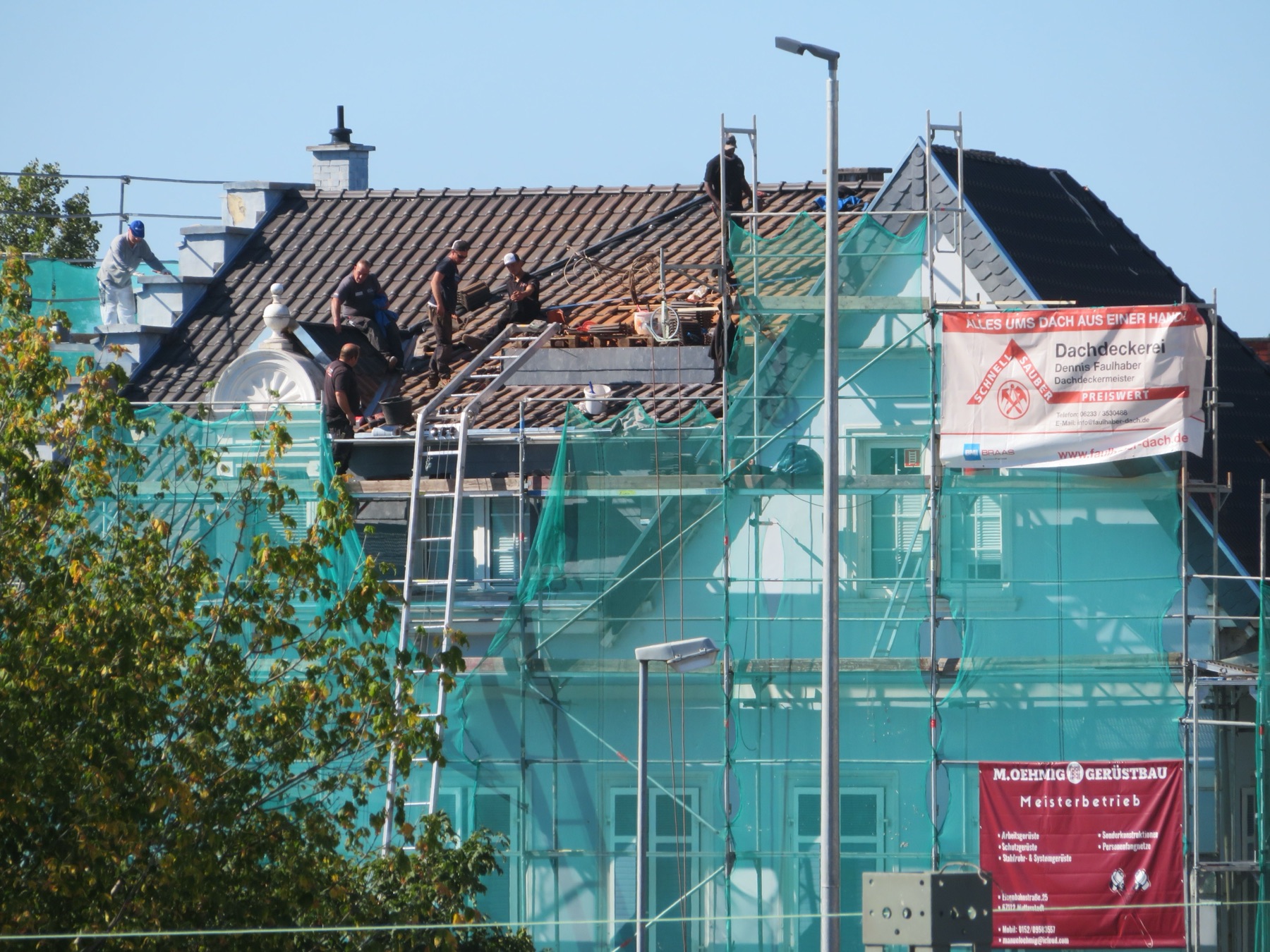
What the week actually looks like
You found out what the roof was doing. You never went up the ladder.
- FRI 07:50
The stain on the bedroom ceiling is new this morning
You ask for a look. We call you back to arrange a time, and that is the whole of the sales process — nobody needs to sit in your kitchen for this.
- MON 09:10
The roof gets walked, and you stay on the ground
Planes measured, penetrations counted, pitch checked, and every piece of flashing on the building looked at. Your ladder stays where it is. Going up there is the part of this you were never going to enjoy and are not insured for.
- MON 09:40
Then the attic, which is the half most roofers skip
From underneath you can read the deck. Rusty nail shanks mean condensation. Dark staining down a rafter means water has been travelling. Daylight at the ridge means the ridge vent is doing something, and daylight at the eave means the intake is.
- MON 10:25
You came for a new roof. You are told you do not need one
Two pipe boots are the fault and the deck under them is sound. “This roof has years left — replace the two boots and call us in 2031.” The roof you were ready to buy is written down as a refusal, at $0.00, with the reason printed beside it.
- MON 10:50
The condition report is in your hand either way
It is written up and given to you whether or not you hire us: what was found, what it is worth doing about, and what we were asked to do and would not. In five years it is the only document that says why the roof was left alone.
That is the whole product: a straight answer about your roof, arrived at from the attic instead of the driveway — and a page you keep, with the refusals printed on it at $0.00 next to the charges.
Key to Fig. 1 — six details, all drawn
- Ridge ventCut into the deck under the cap, so the attic exhausts along the whole ridge.
- ValleyWhere two planes meet. Membrane, then W-profile metal, shingles cut back.
- Step flashingOne L-shaped piece per course up a wall, never one long strip and caulk.
- Drip edgeOver the fascia and into the gutter. Under the underlayment at the eave.
- Pipe bootA plumbing vent through the roof. Lead, with the sleeve dressed into the pipe.
- Gutter and downspoutSized and pitched so what the roof sheds actually leaves the building.
Roof condition report
Pipe boot — east slope, 3″ ABS
Neoprene collar split all the way round the pipe, cracked by sun rather than age. This is the commonest leak on a Florida roof and the cheapest line on this report. Replaced with a lead boot, the sleeve dressed down inside the pipe.
Deck — north‑west corner, 3 sheets
Plywood soft where the old closed‑cut valley had been running behind the shingle. It sounded wrong underfoot before tear‑off and confirmed once it was open. Three sheets of 15/32 CDX cut in, H‑clips at the unsupported joints.
Deck re‑nail — whole roof
Existing deck re‑nailed to current Florida Building Code: 8d ring‑shank, 6″ on center, field and edges. Only possible with the deck exposed, which is only true on a tear‑off.
Drip edge — all eaves and rakes
The old roof had none at the rakes at all and a rolled 2″ hemmed edge at the eaves. New 8″ aluminum: at the eaves it goes under the underlayment, at the rakes over it, which is the way round most people get wrong.
Valley — house to garage wing
Closed‑cut valley, cut line wandering and starved of shingle on the low side. Opened up with 24″ W‑profile galvanized valley metal over self‑adhered membrane, shingles cut back 3″ and clipped.
Intake ventilation — soffit
Ridge exhaust was long and the intake was short: 14 of the 30 soffit panels were solid vinyl over solid plywood. A ridge vent with nothing feeding it pulls air out of the house instead of the eave. Eight more intake panels cut in and baffled.
Re‑roof — 22.4 squares
Tear‑off to deck, synthetic underlayment, 36″ self‑adhered membrane at every eave and in both valleys, starter at eaves and rakes, architectural shingle, six nails per shingle in the manufacturer's nailing strip, ridge vent cut and capped.
Overlay — second layer over the existing shingles — DECLINED
Requested and not done. A second layer hides a deck nobody has looked at, adds weight the framing was not designed for, and most shingle manufacturers void the warranty on an overlay. Tear‑off, inspect the deck, then re‑roof.
Example document. Job number, address, measurements and prices are invented for this demonstration site. Nothing here is a quote for a real roof.
Line 08
The most important line on that page is the one that cost nothing
The homeowner on that job asked for an overlay. It is a reasonable thing to ask for: it is cheaper, it is faster, and somebody had told them it was fine. We said no, wrote down why, and printed the refusal on the invoice at $0.00 so it would still be there in five years when somebody asks why the roof was done the expensive way.
Here is the whole argument. Shingles are the cheap part of a roof. The deck under them is plywood or board that has been sitting in Florida humidity with a bathroom fan blowing into the attic, and the only day anybody ever gets to look at it is the day the old roof comes off. Nail a second layer over the top and you have bought yourself a guess. You have also added roughly two and a half pounds a square foot to framing that was sized for one layer, and you have put the new shingles on an uneven surface, which means they never lie flat, which means the wind gets a fingernail under them.
And then there is the paperwork. Read your shingle warranty. Most manufacturers will not honor it over an existing layer, because their fastening schedule assumes a nail driven through shingle into deck, not through shingle into shingle into deck. So the overlay saves money on day one and costs you the warranty, the deck inspection and the deck re-nail, which is the one thing the building code actually cares about.
We would rather lose the job. Occasionally we do.
Numbers we publish
Two specs the trade usually keeps to itself
Both of these are invisible the moment the next course goes down, which is exactly why they are worth writing on a website. Ask any roofer for these two numbers. If the answer is vague, that is your answer.
Spec 1 — deck re-nail
Fig. 2 — deck re-nail, drawn. Edges and field, 6″ on center, 8d ring-shank, over every rafter and around all four edges of every sheet. It can only be done with the shingles off.
- Fastener
- 8d ring-shank
- Spacing
- 6″ on center, field and edges
- When
- Deck exposed, before dry-in
- Scope
- Whole deck, not just the sheets we replaced
- Why
- Florida Building Code requires an existing deck to be re-nailed when the roof is replaced. Most decks from before the mid-nineties were put down with smooth shank nails at whatever spacing the framer felt like, and ring-shank at 6″ is what keeps the sheathing on the rafters in a blow. It can only be done with the shingles off, which is the second reason an overlay is a bad trade.
Spec 2 — nails in the shingle
Fig. 3 — the nailing zone, drawn. Six nails, in the strip, flush and square to the deck. An inch high and the nail holds one layer instead of two — and the next course covers the evidence.
- Count
- 6 per shingle
- Placement
- In the manufacturer's nailing strip
- Depth
- Flush. Not driven through the mat
- Angle
- Square to the deck
- Why
- Every architectural shingle has a narrow strip printed or embossed across it, usually about an inch tall, and that strip is the only place a nail holds. High is the classic mistake: a nail an inch above the line catches one layer instead of two, the head sits proud, and the next course covers the evidence forever. Six is the high-wind schedule, and this part of Florida is a high-wind zone, so six is what we do everywhere, not just on the corners.
What we do
Eight kinds of work
- 01 Tear-off and re-roof Old roof to the deck, deck repaired and re-nailed to code, dried in, flashed and shingled. The only version of a new roof we sell.
- 02 Roof repairs A repair when a repair is honest, and a straight answer when it is money thrown at a roof with two years left in it.
- 03 Leak diagnosis Attic first, roof second, water test third. The stain on your ceiling is almost never under the hole.
- 04 Flashing and pipe boots Step, counter, apron, kick-out, valley metal and boots. Where roofs actually leak, and where caulk pretends to be a repair.
- 05 Ventilation, intake and exhaust Ridge vent is the easy half. The soffit intake feeding it is the half that is usually missing.
- 06 Storm inspection What we look at after a blow, what we will document, and the two things Florida law says a roofer cannot do for you.
- 07 Gutters, fascia and drip edge Gutter apron, hanger spacing, pitch and outlet count. Most rotten fascia is a drip edge problem wearing a gutter costume.
- 08 Flat and low-slope roofing Lanais, porch roofs and additions under 2:12, where shingles do not belong and a self-adhered system does.
Before anything comes off
Nothing is torn off until you have signed the scope
The order matters. We walk it, we go in the attic, we measure, and we write the scope with the tear-off, the deck repair, the re-nail, the underlayment, the metal and the shingle priced as separate lines. You read it. You approve it in writing. Only then does anybody pull a shovel out of the truck.
Deck damage is the one thing nobody can price honestly from the driveway, so it is priced by the sheet up front and counted on the day, with the deck open, before dry-in. You get the sheet count while the deck is still open, not in a line item on the final bill, and you are welcome to walk out and stand under it and count them with us.
Where we work
One crew and one truck, which sets an honest radius: roughly half an hour out of Apopka. Apopka, Ocoee, Winter Garden, Zellwood, Plymouth, Tangerine, Clarcona, Lockhart, Wekiwa Ocoee, Altamonte Ocoee, Longwood, Sorrento, Mount Dora and the north and west sides of Orlando.