Five steps
Nothing comes off
until you have said yes
The single most common complaint about roofers is not price, it is surprise. So the scope is written before the work, the unknowns are priced before the work, and the one genuine unknown — the deck — is counted in front of you on the day.
-
We walk it, and we go in the attic
The attic is half the inspection and most roofers skip it. From underneath you can read the deck: rusty nail shanks mean condensation, dark staining down a rafter means water has been traveling, daylight at the ridge means the ridge vent is doing something, and daylight at the eave means the intake is. We measure the planes, count the penetrations, check the pitch, and look at every piece of flashing on the building.
The condition report from that walk is written up and given to you whether or not you hire us. If the answer is “this roof has years left, replace the two boots and call us in 2031”, that is what the report says.
-
The scope is written line by line, including the refusals
Tear-off, deck repair by the sheet, the code deck re-nail, underlayment, self-adhered membrane, drip edge, valley metal, flashing, boots, vents, shingle, ridge cap, cleanup and haul-off, each on its own line with its own number. Anything you asked for that we are not going to do appears too, at $0.00, with the reason.
You will also get the sheet price for deck replacement in writing, before the day, so that the one variable in the job cannot become a negotiation while your house is open.
-
You approve it in writing. Then we order material
No deposit is taken to hold a date and no shingle is ordered before you have signed. Color is chosen off a board and, if you want, off somebody else's roof in the neighborhood — a chip the size of a playing card is a poor way to judge a color that will cover two thousand square feet.
-
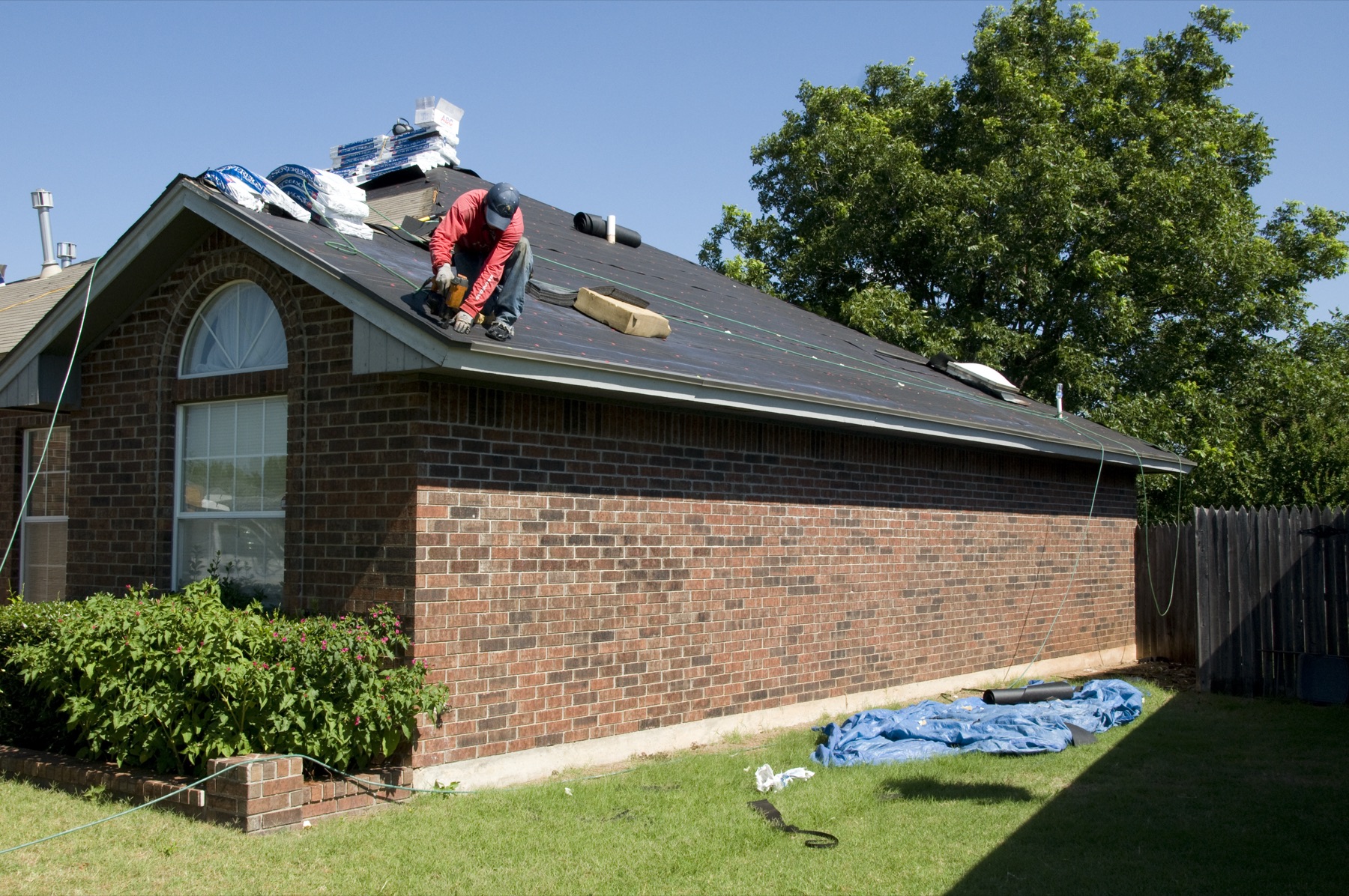
Tear-off day: the deck is exposed, counted and re-nailed
The old roof comes off to bare deck, in sections, so that no more of the house is open than we can dry in the same day. Soft or delaminated sheathing is cut out and replaced, and you get the count while it is still open. Then the whole deck — not just the new sheets — is re-nailed with 8d ring-shank at 6″ on center, which is what the Florida Building Code asks for on a re-roof and the reason an overlay is a bad trade.
Dry-in follows the same day: eave and valley membrane first, then synthetic underlayment, then the eave drip edge under it and the rake drip edge over it.
-
Flash it, shingle it, sweep it, and walk it with you
Valleys, step flashing, kick-outs and boots go on before the field is chased up the roof. Starter course at the eaves and up the rakes, six nails per shingle in the nailing strip, ridge cut for vent and capped. Then the ground: tarps lifted, gutters cleared of nails and granules, and a rolling magnet over the drive, the beds and the lawn twice, in two directions.
The last thing that happens is the report. Final version, with the deck sheet count on it, the fastener and ventilation specification, and the workmanship warranty attached. We walk the roof line and the gutters with you before the truck leaves.
What happens if the weather turns
We do not open more roof than we can dry in before dark, and we do not open a roof at all on a day the radar says otherwise. If a job stops halfway it stops watertight, not under a tarp with a brick on it. That is why we work in sections instead of stripping the whole house at eight in the morning.