06 · Storm inspection
We do not knock
on doors, and we
cannot adjust
your claim
After a blow there are two kinds of roofer in the street: the ones looking at roofs and the ones looking for signatures. We will come and read your roof and write down what is actually there, including the times that is very little.
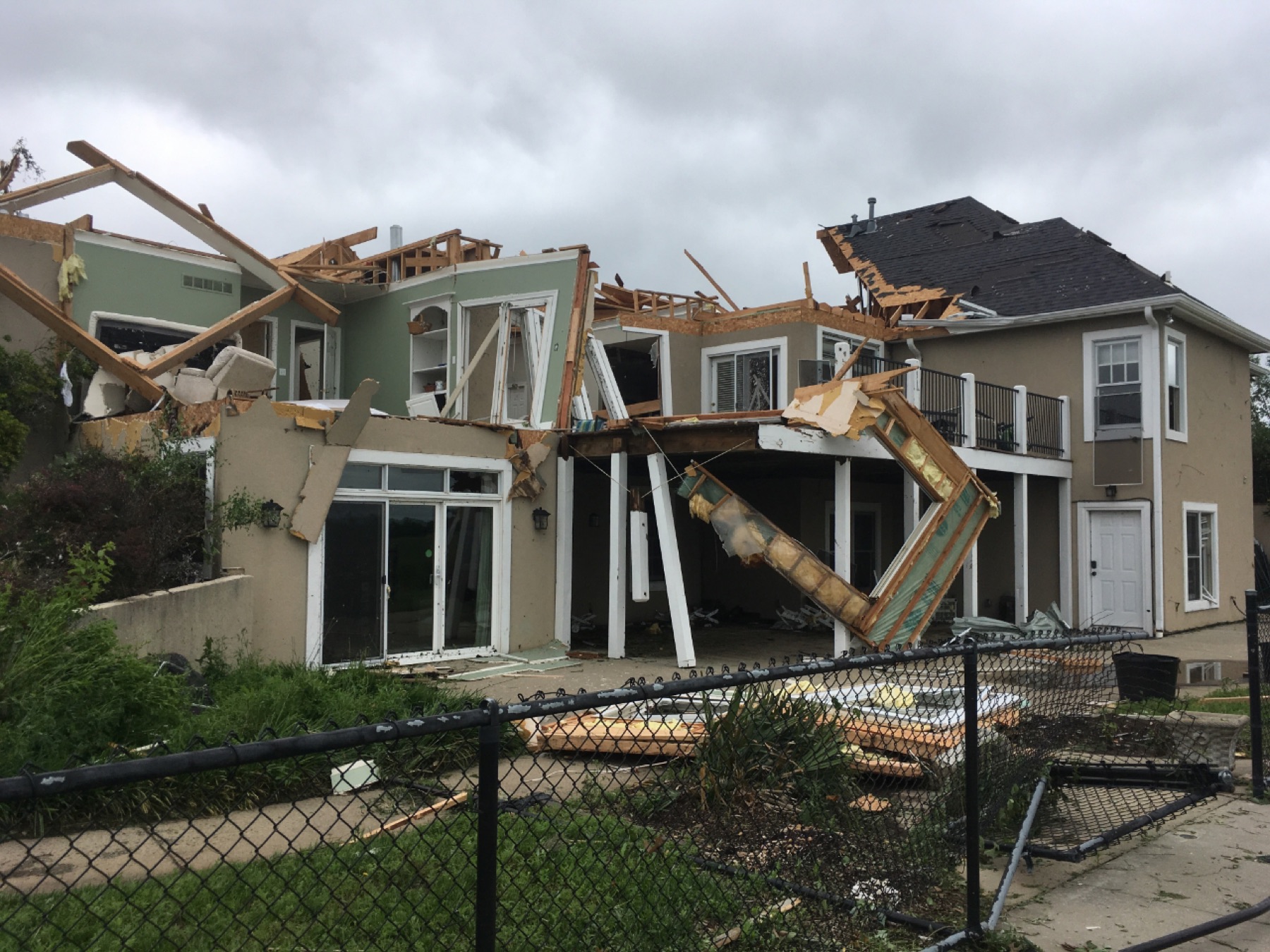
After a storm
- Looked at first
- Soft metals — vents, gutter apron, drip edge
- Then
- Windward slopes for creased tabs
- Then
- Ridge and hip cap, every penetration, the attic
- We will
- Write a condition report and meet your adjuster on the roof
- We will not
- Negotiate or settle the claim — that is public adjusting
- We will not
- Waive, rebate or absorb your deductible. Illegal in Florida
- We will not
- Knock on your door after a storm
- 25% rule
- Ask for the code section and your permit history
What we look at, and in what order
The soft metals first, because they bruise before shingles tear and they are the honest witness. Aluminum vent housings, the gutter apron, the drip edge and the gutters themselves take hail and debris visibly. If those are clean, the story about catastrophic hail damage to the shingles gets harder to tell.
Then the windward slopes for creased tabs — a shingle that has been lifted and folded back carries a horizontal crack line across the mat even after it lies back down, and that shingle will fail whether or not it is loose today. Then the ridge and hip cap, which goes first in wind. Then every penetration, because a boot that has been lifted is a leak next month. Then the attic, for wet insulation and daylight.
What we will and will not do about insurance
We will document conditions properly — a written report of what we found, where, and what it would take to put right — and we will meet your adjuster on the roof and walk it with them. That is legitimate and useful, and it is what a contractor is for.
What we will not do is act as your adjuster. In Florida, negotiating or settling an insurance claim on a homeowner's behalf is public adjusting, and it requires a license a roofer does not hold. Any contractor who offers to “handle the whole claim for you” is either licensed as a public adjuster or is doing something they should not. Ask which.
And we will not touch your deductible. Florida law does not allow a contractor to waive, rebate, absorb or otherwise pay a residential property insurance deductible, and there are quite specific penalties. An offer to “take care of the deductible” is not generosity, it is a request to be complicit in an inflated claim, and it tells you what the rest of that company's paperwork is going to look like.
The 25 percent rule, which is not as simple as people say
You will hear that if more than a quarter of a roof is damaged in any twelve months, the whole thing has to be brought up to current code. That was the plain rule for a long time. The exemptions changed in 2022, and there is now a path where a roof built to a recent edition of the Florida Building Code can have the damaged portion repaired rather than the whole roof replaced.
Whether that applies to your house depends on when the roof was permitted, so the honest answer is: ask whoever tells you the rule to show you the code section and the permit history for your address. We will show you ours. Nobody should be quoting you a whole roof on the strength of a rule of thumb they have not looked up.
If it is actively leaking
Call the number. Temporary cover to stop water coming in is a legitimate emergency measure and it should be done properly — fastened, lapped uphill, and off the ridge — not a tarp with concrete blocks on it that funnels water into a different room. It also should not be presented as a repair, and it should not require you to sign anything about the permanent work.
And if the roof is fine
We write that down too. A storm report that says the vents are undamaged, the cap is intact, there are no creased tabs and the attic is dry is a genuinely useful document to have on file, and it costs you the same as any other look: nothing.
Other work
The rest of what we do
- 01 Tear-off and re-roof Old roof to the deck, deck repaired and re-nailed to code, dried in, flashed and shingled. The only version of a new roof we sell.
- 02 Roof repairs A repair when a repair is honest, and a straight answer when it is money thrown at a roof with two years left in it.
- 03 Leak diagnosis Attic first, roof second, water test third. The stain on your ceiling is almost never under the hole.
- 04 Flashing and pipe boots Step, counter, apron, kick-out, valley metal and boots. Where roofs actually leak, and where caulk pretends to be a repair.
- 05 Ventilation, intake and exhaust Ridge vent is the easy half. The soffit intake feeding it is the half that is usually missing.
- 07 Gutters, fascia and drip edge Gutter apron, hanger spacing, pitch and outlet count. Most rotten fascia is a drip edge problem wearing a gutter costume.
- 08 Flat and low-slope roofing Lanais, porch roofs and additions under 2:12, where shingles do not belong and a self-adhered system does.